Why Your Mini Aussie Puppy Won’t Stop Biting
Puppy biting is normal. Letting it become a habit is not. The trick is understanding what your puppy is actually telling you with their mouth — and what your response is teaching them.
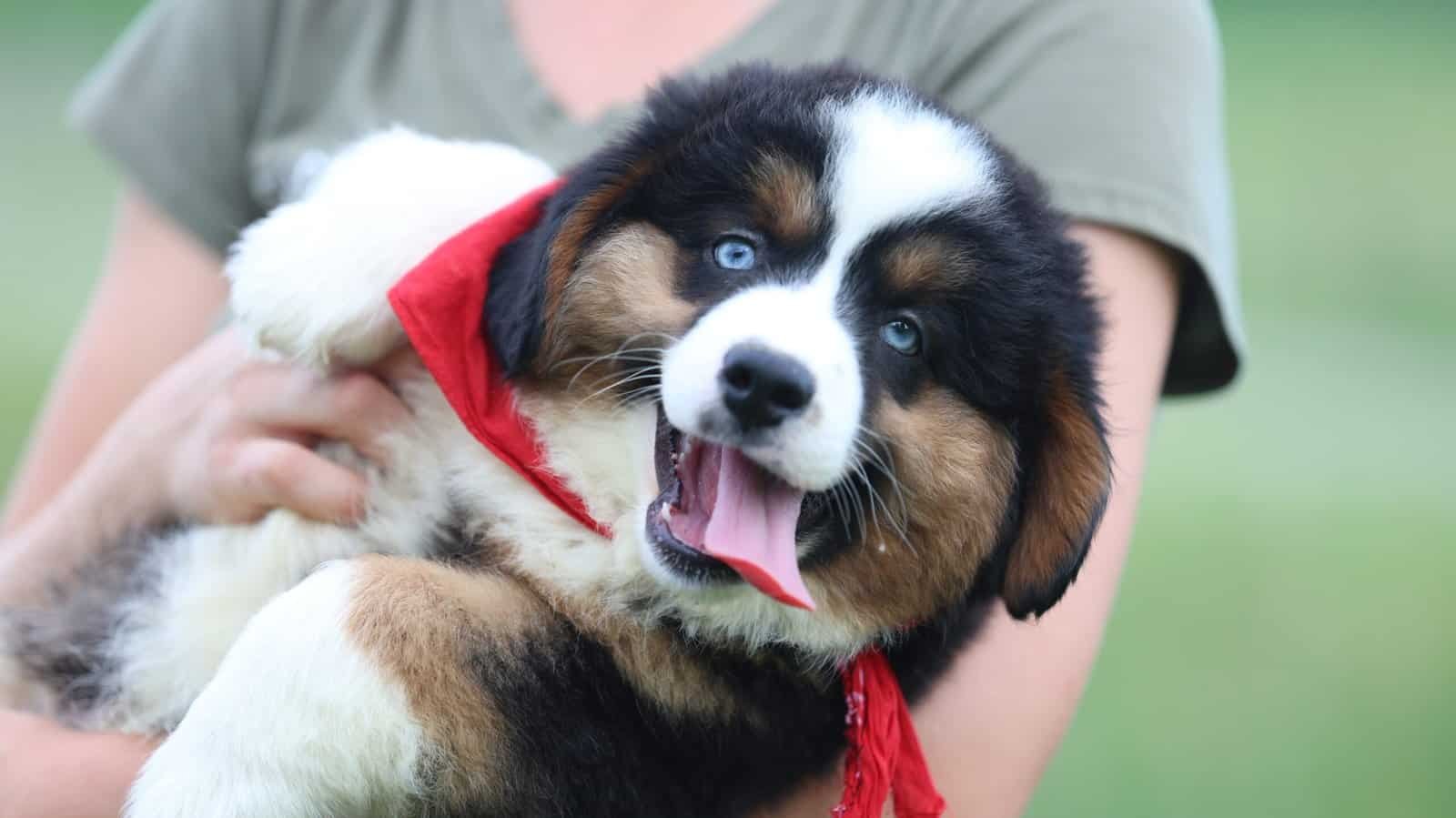
Puppy biting is usually not a biting problem. It is an impulse control problem.
Most new owners focus on the teeth. The teeth are not the whole issue. A puppy that is overstimulated, overtired, frustrated, teething, or overexcited is far more likely to use their mouth inappropriately. When you understand that, you stop reacting emotionally and start training the behavior underneath the bite.
Why Mini Aussie Puppies Bite
Mini Aussie puppies bite for several reasons at once. They are exploring the world with their mouths. They are playing. They are teething. They are learning how hard is too hard. And because Aussies are herding dogs, motion can trigger chasing, grabbing, ankle nipping, pant-leg biting, and attempts to control movement.
That does not mean your puppy is aggressive. It means your puppy is normal. But normal behavior still needs training. A Mini Aussie puppy who rehearses biting people every day will get faster, stronger, and more committed to the habit as they grow.
The goal is not to stop your puppy from using their mouth. The goal is teaching when, where, and how to use it appropriately.
Herding Genetics
Fast movement, running children, waving hands, and pant legs can activate chase-and-control instincts.
Teething
From roughly 12 to 24 weeks, sore gums make chewing more intense and more frequent.
Overstimulation
Too much excitement often creates more biting, not better behavior.
Overtired Puppy
A puppy who needs sleep often becomes wild, mouthy, and hard to redirect.
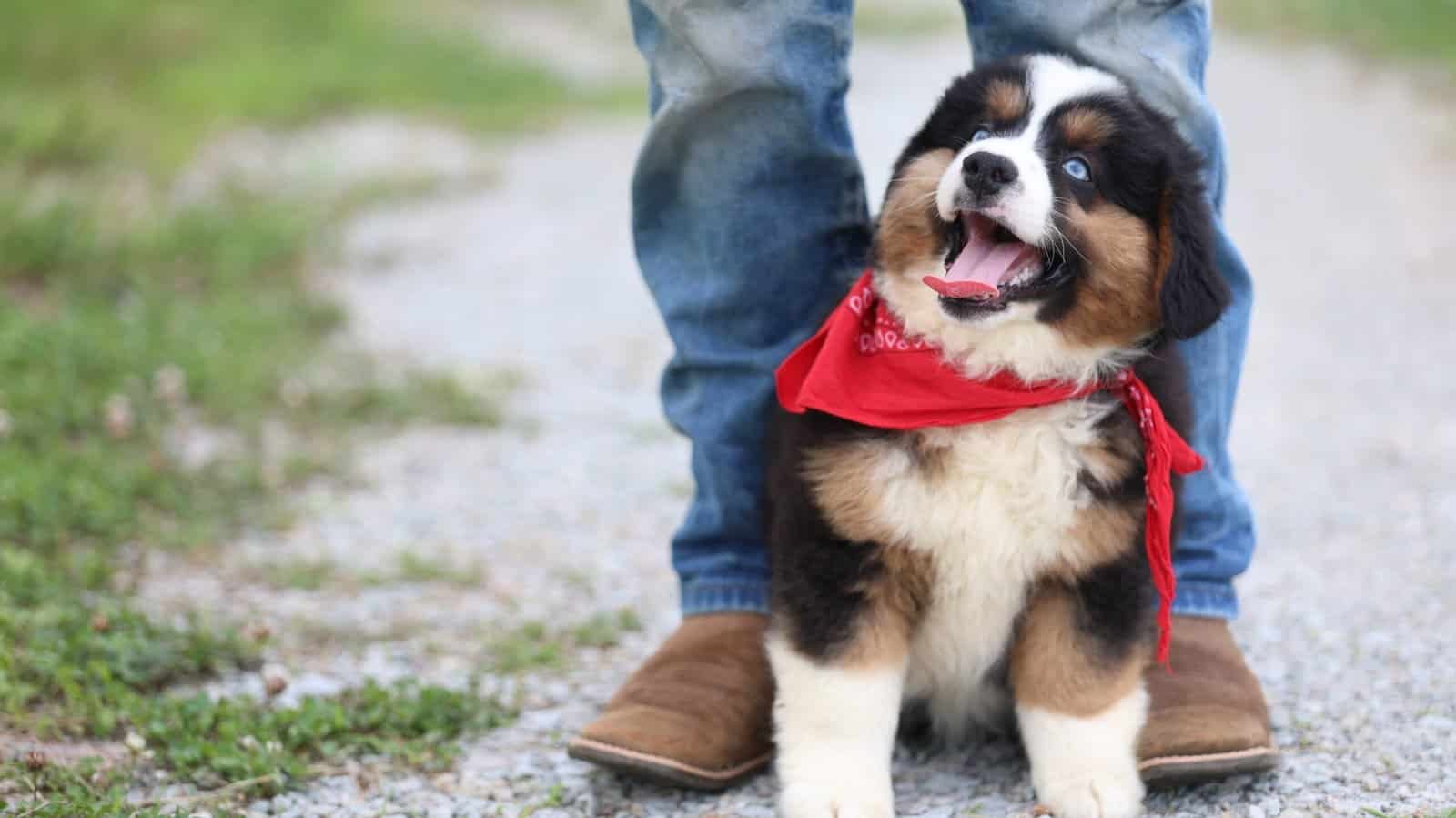
One of the biggest mistakes new owners make is assuming every wild behavior means the puppy needs more activity. Sometimes the puppy needs a nap, a crate break, a calmer environment, or a clearer routine. More chaos usually creates more biting.
The Biggest Mistake New Puppy Owners Make
The biggest mistake is accidentally turning biting into a game. Puppies are excellent observers. If biting gets your hands moving, your voice squealing, your body dancing, or your full attention, your puppy may decide biting is an excellent strategy.
This is where a lot of well-meaning advice falls apart. If you shove a toy in the puppy’s mouth every single time they bite you, but you do it while the puppy is actively biting, some puppies learn that biting people makes toys appear. Timing matters.
Waving Hands
Fast hands look like toys. Keep your movement calm and boring.
Squealing
Some puppies get more excited when people yelp or shriek.
Wrestling
Rough play teaches puppies that human skin and clothes are part of the game.
Rewarding Chaos
If biting earns attention every time, your puppy will keep trying it.
The Blue Buckaroo Puppy Biting Plan
This is the simple framework we want families to understand: prevent the puppy from rehearsing the wrong thing, reward calm behavior before chaos starts, and redirect in a way that teaches thinking instead of frantic mouthiness.
Prevent Rehearsal
Do not allow repeated biting practice. Use gates, crates, naps, and structure before the puppy gets wild.
Use A House Line
A light indoor leash gives you control without grabbing the puppy’s collar or turning it into a chase game.
Reward Calmness
Most owners only notice chaos. Pay calm behavior before your puppy has to escalate to get attention.
Legal Chewing
Offer appropriate chews, frozen washcloths, stuffed Kongs, and safe teething options before the puppy targets you.
Stay Consistent
Everyone in the house must respond the same way. Inconsistency creates confusion, and confusion creates more biting.
Watch These Puppy Biting Tutorials
These videos reflect the same principles we want Blue Buckaroo families to understand: management first, calmness second, consistency always. Watch them before your puppy comes home, then watch them again when the biting phase hits.
Puppy Biting Basics
Start here for understanding what is normal and what needs structure.
Better Timing
Learn why your response timing changes what your puppy learns.
Stopping The Pattern
Use structure and consistency instead of reacting emotionally.
Teething vs. Behavior Problems
Teething can increase chewing, but it does not explain every biting pattern. If your puppy is calmly chewing a safe item, that is normal teething. If your puppy is repeatedly targeting hands, clothes, ankles, and children during excitement, that is a training and impulse control issue.
| Normal Teething | Training Issue |
|---|---|
| Increased chewing during tooth eruption | Targets people constantly during excitement |
| Seeks chew toys, frozen cloths, and appropriate outlets | Ignores alternatives and returns to hands, sleeves, or pant legs |
| Comes and goes with gum discomfort | Gets stronger because the behavior is being rehearsed |
| Improves with age and support | Requires management, structure, and consistent training |
| Mostly about sore gums | Mostly about arousal, motion, attention, and impulse control |
What To Do When Your Puppy Bites You
When your puppy bites, your first job is not to lecture, panic, or wrestle. Your job is to become calm, clear, and boring enough that the puppy can think again.
- Yelling or emotional corrections
- Holding the muzzle shut
- Alpha-roll nonsense
- Chasing the puppy through the house
- Rough wrestling with hands
Mini Aussie Puppy Biting FAQs
When do Mini Aussies stop biting?
Most improve significantly between 5 and 7 months, especially when owners are consistent. Adolescent mouthiness can still appear if the dog is overstimulated or under-structured.
Is puppy biting aggression?
Almost never. Most puppy biting is normal development, teething, play, herding instinct, or overstimulation. True aggression looks different and should be evaluated by a qualified trainer.
Why does my puppy bite my hands?
Hands move, grab, pet, deliver food, and create reactions. To a puppy, hands are interesting. Teach calm handling and avoid turning your hands into toys.
Why does my puppy bite clothes?
Moving fabric triggers chase and tug behavior. Pant legs, sleeves, dresses, and children’s clothing are common targets for herding breeds.
Should I yelp when my puppy bites?
Usually no. Some puppies pause, but many become more excited. Calm interruption and better management are more reliable.
Why is my puppy worse at night?
Evening biting is often overtired puppy behavior. Add earlier naps, calmer evenings, and structured wind-down time.
How long does teething last?
Most puppies finish teething around 6 to 7 months. Chewing often peaks between 12 and 24 weeks.
Should I hold my puppy’s mouth shut?
No. It can create frustration, hand-shyness, or more excitement. Teach alternatives and manage the puppy before they rehearse biting.
Why does my puppy bite my kids more?
Children move faster, squeal more, and are less predictable. To a herding breed, that movement is highly triggering. Supervision and structure matter.
Does exercise stop puppy biting?
Exercise helps, but it is not enough. Mental work, naps, calmness, management, and impulse control are just as important.
Helpful Blue Buckaroo Resources
The biting phase is temporary. The habits you teach during it are not.
The first year shapes the next fifteen. Better structure now gives your Mini Aussie the best chance to become calm, responsive, and genuinely enjoyable to live with.
Puppy Training Resources
Raise A Puppy Who Thinks, Settles, And Learns
Mini Aussies are smart. That’s the gift. The goal is to shape that intelligence before it turns into chaos.
Housebreaking
A clear plan for potty training without confusion, frustration, or mixed signals.
Enrichment Games
Simple ways to satisfy your Mini Aussie’s brain before behavior problems start.
Puppy Kindergarten
See how our puppies begin crate training, manners, confidence, and problem-solving.
Breed Guide
Understand the instincts behind your puppy’s behavior so you can guide them well.
Follow the Daily Adventures of Our Blue Buckaroo Puppies
See puppy videos, training moments, behind-the-scenes updates, and everyday life with our Mini Aussies.