Can You Work Full Time and Have a Mini Aussie?
Yes — but not by accident. The honest truth is that a Mini Aussie can absolutely fit into a working household when there is a real plan for exercise, enrichment, potty breaks, social needs, and quality time outside work hours.

The issue is not whether you work full time. The issue is what happens before work, after work, and in between.
A Mini Aussie does not need you sitting on the couch beside them twenty-four hours a day. They need intentional leadership, daily movement, mental engagement, and a routine that makes sense for a smart herding dog. That can work beautifully for professionals — but it has to be planned.
Yes, working families can do very well with Mini Aussies.
Many successful Blue Buckaroo families work full time. They have careers, children, homes, schedules, and real responsibilities. Their dogs still thrive because the family understands what the breed needs and builds a life around meeting those needs consistently.
The families who struggle are usually not lazy or uncaring. They simply underestimated the amount of structure an Aussie needs. They imagined a dog who could quietly wait all day, then relax all evening. That is not this breed.
A Mini Aussie is a working dog in a smaller package. Smart, observant, people-focused, fast-learning, and deeply bonded. That is exactly why they are so rewarding — and exactly why they do poorly when they are treated like decorative house dogs.
Your time off the clock becomes their time.

What works — and what does not.
The difference between success and struggle is rarely the job itself. It is the routine surrounding the job.
What does not work
- Crating a young puppy for eight straight hours
- No exercise before work
- No midday potty plan
- Coming home exhausted and expecting the dog to relax
- Using the backyard as the full exercise plan
- Ignoring mental stimulation
- Expecting a herding dog to entertain itself all day
What does work
- Structured morning movement before work
- A realistic midday plan for puppies
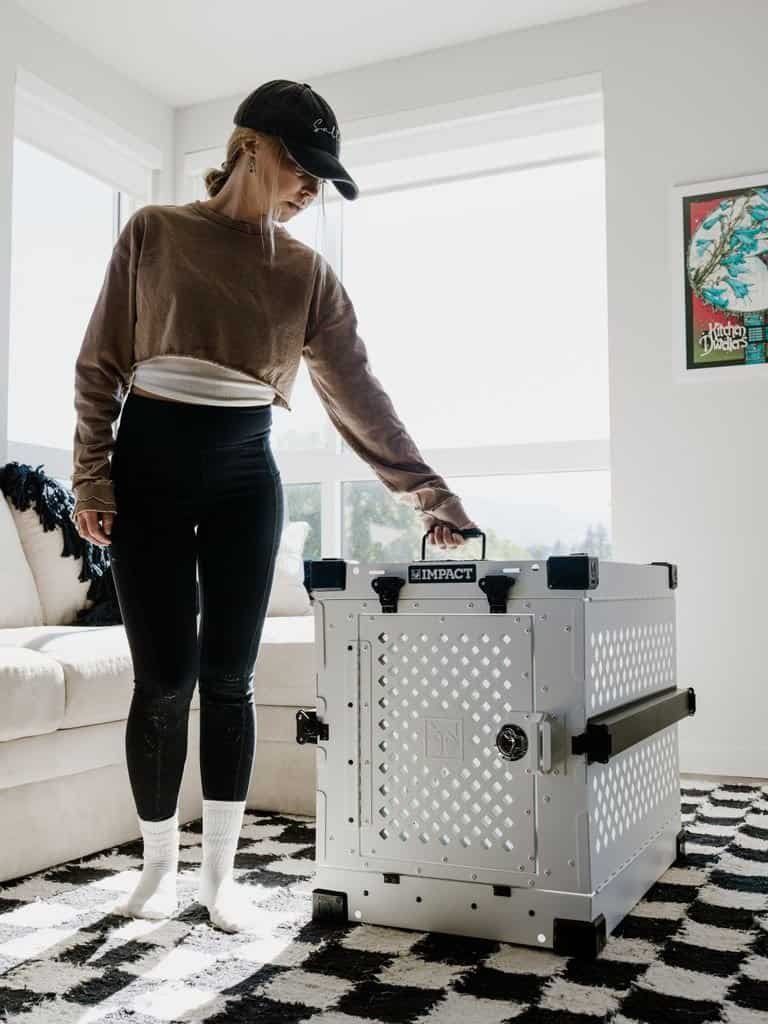
- Safe confinement that matches the dog’s age
- Training games and enrichment
- Evening walk, play, or training session
- Weekend adventure and decompression time
- A family that understands the dog is part of daily life
Puppies are a whole different ball game.
This is where many people get bad advice. An adult Mini Aussie with training, maturity, and a consistent routine may handle a normal workday just fine. A young puppy cannot.
A ten-week-old puppy cannot hold its bladder for eight hours. It is not stubbornness. It is biology. If you work full time and bring home a puppy, you need a real plan before pickup day.
| Need | Adult Mini Aussie | Mini Aussie Puppy |
|---|---|---|
| Bladder control | May handle longer stretches once mature and trained. | Cannot hold it all day. Needs frequent potty opportunities. |
| Confinement | Can learn to rest calmly in a crate or gated area. | Needs age-appropriate confinement with breaks and supervision. |
| Exercise | Needs daily physical and mental work before and after the workday. | Needs short, frequent sessions plus lots of sleep. |
| Independence | Can develop healthy alone-time skills. | Still learning safety, potty habits, crate comfort, and emotional regulation. |
| Risk if unmanaged | Boredom, barking, anxiety, or destructive habits. | Potty setbacks, crate stress, chewing, nipping, and bad habits rehearsed daily. |
A puppy cannot hold it for eight hours. Plan for that before you bring one home.
If you work away from home, the first few months require creativity. That does not mean you cannot have a puppy. It means you need support. The best families solve the problem before the puppy arrives instead of hoping the puppy will somehow adjust to an impossible schedule.
How working families make the puppy stage work.
If you are gone during the workday, these are the options that actually make sense. Some families use one. Many use a combination.
Family member, friend, or neighbor
A trusted person stopping by midday can make the entire setup work. The puppy gets a potty break, a little interaction, and a reset before going back down for rest. Grandparents, older kids, siblings, close friends, and neighbors can all be part of the puppy village.
Professional dog walker
A midday dog walker can provide a potty break, short walk, and human interaction. For a young puppy, the visit does not need to be intense. Calm, reliable, age-appropriate handling matters more than a long outing.
Playpen with potty area
A puppy playpen can be useful when no one can come at the exact right time. Set up a safe area with crate access, water, appropriate chew items, and a separate potty zone. Some families use a puppy litter box, grass tray, or turf system as a temporary management tool.
Work-from-home transition
If you can work from home or arrange flexible days during the first few weeks, do it. The first month is when crate comfort, potty routines, confidence, and household patterns are being built. A little flexibility early can prevent months of frustration later.
Potty systems are management tools. They are not a substitute for housebreaking.
A playpen with a puppy litter box, grass patch, or turf tray can protect your floors and reduce crate stress during long stretches. But the long-term goal is still outdoor potty training. Use the system as a bridge, not a lifestyle.

What a realistic weekday can look like.
A full-time job is not automatically a problem. A lack of rhythm is. Mini Aussies thrive when the day has predictable outlets and predictable rest.
Move first
Start with potty, a purposeful walk, a short training session, breakfast, then calm crate or pen time. The goal is to spend energy before the workday begins.
Break the day
For adults, this may be enrichment and rest. For puppies, plan a potty break with a family member, friend, dog walker, or a safe puppy pen setup with a temporary potty area.
Reconnect
After work, give your Aussie real interaction: walk, fetch, training game, family time, and calm settling practice. Your time off the clock becomes their time.
Fill the tank
Use weekends for adventure, socialization, decompression walks, grooming, and relationship-building. This helps your dog start the next week steadier.
Do not confuse exercise with fulfillment.
Aussies need movement, yes. But they also need work for the brain. A dog can come home from a walk physically tired and still be mentally restless. That is when you get demand barking, counter surfing, nipping, pacing, and general chaos.
Build mental work into the routine. Feed out of puzzle toys. Use snuffle mats. Scatter feed in the grass. Teach tricks. Practice impulse control. Do short training sessions before meals. Let them sniff on a long line instead of marching them down the sidewalk on a tight leash every day.
High-value enrichment
- Snuffle mats and scatter feeding
- Frozen Kongs or Toppls
- Short training games
- Hide-and-seek with treats
- Long-line decompression walks
- Place work and calm settling practice
Common mistakes
- Assuming the backyard is enough
- Only exercising the body
- Skipping training because the dog is “smart”
- Leaving food in a bowl with no work involved
- Waiting until behavior falls apart to add structure
For more ideas, read our Mini Aussie Enrichment Games guide and our Mini Aussie Exercise Needs guide.
A bored Aussie is exhausting. A fulfilled Aussie is delightful.
This is the part people miss. Mini Aussies are not difficult because they are bad dogs. They are difficult when their intelligence has nowhere to go. Give that brain a job and the whole dog changes.
Signs your workday setup is not working.
If your Mini Aussie is struggling with the routine, they will usually tell you through behavior. Do not ignore the message. Adjust the plan.
These are not character flaws. They are information. A dog who is getting enough exercise, enough mental work, enough rest, and enough connection is much easier to live with than a dog trying to meet all those needs alone.
Working Full Time With A Mini Aussie FAQs
Can Mini Aussies be left alone while I work?
Adult Mini Aussies can learn to handle alone time if they have exercise, training, mental enrichment, and a consistent routine. Puppies need much more support and cannot be left for a full workday without a potty plan.
Can a Mini Aussie puppy stay home for 8 hours?
No. A young puppy cannot hold its bladder for eight hours and should not be expected to. Use a midday helper, dog walker, playpen system, or flexible work arrangement during the puppy stage.
How long can a Mini Aussie be alone?
It depends on age, training, temperament, and routine. Mature dogs may handle a normal workday with the right setup. Young puppies need breaks every few hours.
Are Mini Aussies good for working professionals?
Yes, if the professional is active, organized, and willing to make the dog part of the daily rhythm. They are not ideal for people who want a low-effort dog after a long workday.
Do Mini Aussies get separation anxiety?
They are people-focused and can become overly dependent if alone-time skills are never taught. Crate training, calm exits, routine, enrichment, and independence practice help prevent problems.
Should I hire a dog walker?
For many working puppy owners, yes. A reliable dog walker or trusted midday helper can make the first few months far more manageable.
Can I use a puppy litter box?
Yes, as a temporary management tool inside a playpen setup. It can protect housebreaking during long work blocks, but the long-term goal should still be outdoor potty training.
What if I work long shifts?
If you routinely work long shifts, you need consistent help: family, dog walker, daycare when age-appropriate, or a schedule change. A Mini Aussie should not spend its life waiting alone.
Helpful Blue Buckaroo Resources
Success is not about being home all day. It is about making the hours you are home count.
A Mini Aussie can fit beautifully into a working household when the plan is honest, structured, and built around the dog’s real needs. If you are wondering whether your schedule is a good fit, ask before you reserve.
Continue Your Mini Aussie Research
Still Deciding If A Mini Aussie Is Right For You?
These guides will help you understand the breed, the lifestyle, and what kind of home helps a Mini Aussie thrive.
Mini Aussie Breed Guide
Learn the temperament, energy level, instincts, and traits that make this breed so special.
Apartment Living
Can a Mini Aussie live happily in an apartment? Yes, with the right structure.
Working Full Time
How to raise a Mini Aussie when you have a real work schedule and a real life.
Male vs Female
A practical look at personality, fit, and what matters more than gender.
Follow the Daily Adventures of Our Blue Buckaroo Puppies
See puppy videos, training moments, behind-the-scenes updates, and everyday life with our Mini Aussies.