Mini Aussie Puppy Training
Teaching Your Mini Aussie Puppy To Walk Nicely On A Leash
Your puppy does not naturally know how to walk politely beside you. Loose leash walking is a learned skill — and with a smart Mini Aussie, the foundation matters more than the distance.
The goal is not to drag your puppy around the neighborhood. The goal is to teach engagement, calm movement, and the habit of checking in with you.
The Blue Buckaroo Approach
Walks start before walks.
Most leash problems begin because the puppy is taken into an exciting environment before they understand how to follow, check in, and stay connected.
Before you expect a beautiful neighborhood walk, teach your puppy that being near you is valuable. That starts inside the house, in the yard, and during tiny training moments throughout the day.
The Biggest Mistake: Expecting A Walk Too Soon
To your puppy, the outside world is full of movement, smells, sounds, leaves, people, dogs, grass, birds, and distractions. If you put a leash on your puppy and immediately expect them to walk like a finished dog, you are asking too much too soon.
Start smaller. A five-minute practice session in your kitchen can teach more than a twenty-minute pulling session down the road.
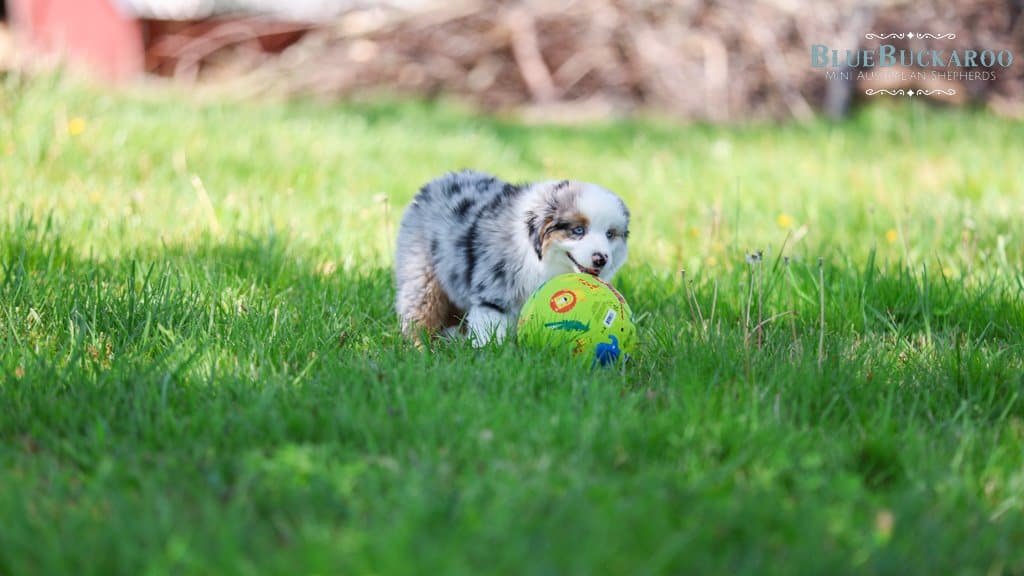
Teach Engagement First
Mini Aussies are brilliant pattern learners. If they learn that pulling moves you forward, they will pull. If they learn that checking in with you opens the door to movement, rewards, and adventure, they will start choosing you.
Before leash walking becomes about distance, make it about connection.
Start With These Foundation Skills
Reward Position, Not Pulling
Reward your puppy beside your leg. Not out in front. Not after they drag you forward. Not when the leash is tight.
Where you deliver the reward teaches your puppy where value lives. If the reward always shows up beside you, your puppy will start returning to that position.
What To Do When Your Puppy Pulls
Do not jerk, drag, or get into a battle. Pulling should simply stop the forward motion.
The moment the leash relaxes, move again. Your puppy learns a simple rule: loose leash makes life move forward, tight leash makes life stop.
This works best when you are calm, consistent, and not in a hurry.
Use Direction Changes To Build Attention
If your puppy locks onto something ahead, calmly change direction. No drama. No scolding. No yanking.
A Mini Aussie quickly learns that paying attention to you matters because you may change the game at any moment.
Blue Buckaroo Philosophy
Every Walk Is Really A Training Session
One of the biggest mindset shifts we teach our families is this: do not think you are simply taking your puppy for a walk. Think of it as taking your puppy out to practice paying attention.
Distance does not build a great dog. Hundreds of tiny successful repetitions do.
A beautiful leash walk is built through small moments of clarity, not one long exhausting walk around the neighborhood.
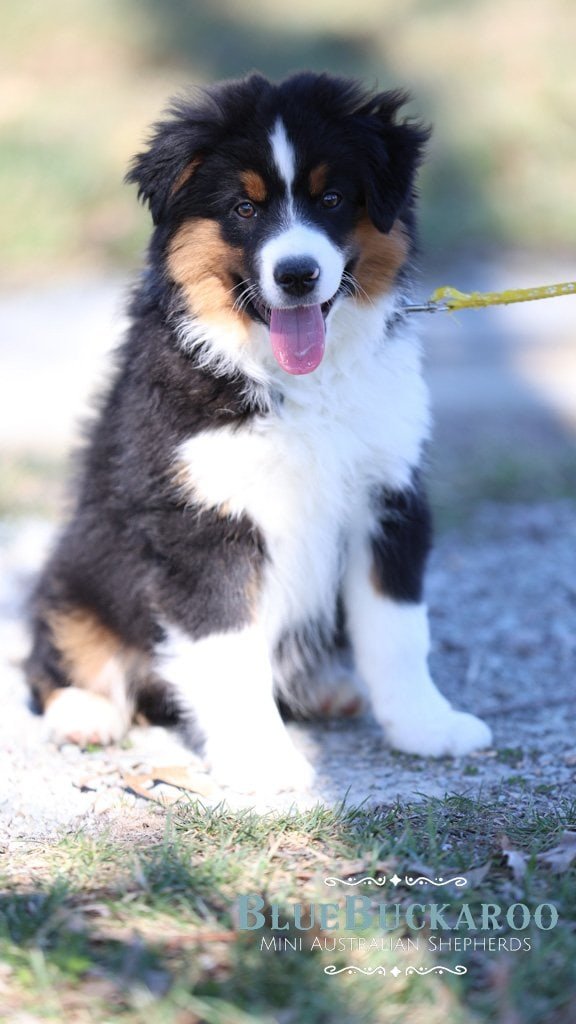
Keep Sessions Tiny
A young puppy does not need a long walk. They need short, successful repetitions.
- Walk across the kitchen.
- Practice in the hallway.
- Walk around the driveway.
- Practice after a potty break.
- Stop before your puppy gets wild or tired.
Every Potty Break Can Become A Training Moment
After your puppy goes potty, use 30–90 seconds to practice engagement. Name response. Following your hand. Sitting beside you. Taking two or three beautiful loose-leash steps.
This is how training becomes part of life instead of a separate event you never have time for.
Puppy Training Gear
The right tools make leash training easier.
You do not need gimmicks. You need a lightweight leash, good rewards, safe management tools, and a plan.
View Our Puppy Training ResourcesLeash Training FAQ
When should I start leash training my Mini Aussie puppy?
Immediately, but start indoors or in quiet areas. Teach engagement before expecting a real walk.
Should I take my puppy on long walks?
No. Young puppies need short, successful training sessions. Quality matters more than distance.
What should I do if my puppy pulls?
Stop moving. Wait for the leash to relax. Then continue. Forward motion should reward a loose leash, not a tight one.
Should I use a harness or collar?
A lightweight flat collar and leash are enough for foundation training. A front-clip harness can help some families, but equipment does not replace training.
Continue Your Puppy Research
Build The Right Foundation From Day One
Puppy Training Resources
Raise A Puppy Who Thinks, Settles, And Learns
Mini Aussies are smart. That’s the gift. The goal is to shape that intelligence before it turns into chaos.
Housebreaking
A clear plan for potty training without confusion, frustration, or mixed signals.
Enrichment Games
Simple ways to satisfy your Mini Aussie’s brain before behavior problems start.
Puppy Kindergarten
See how our puppies begin crate training, manners, confidence, and problem-solving.
Breed Guide
Understand the instincts behind your puppy’s behavior so you can guide them well.
Follow the Daily Adventures of Our Blue Buckaroo Puppies
See puppy videos, training moments, behind-the-scenes updates, and everyday life with our Mini Aussies.