Stop Trying to Make Your Puppy Social
I don’t want a puppy who thinks every person, dog, child, shopping cart, bicycle, and squirrel is an invitation to interact. I want a puppy who can notice the world without needing to react to all of it.
That is a very different goal—and for an intelligent, observant herding breed like the Mini Australian Shepherd, it matters enormously.
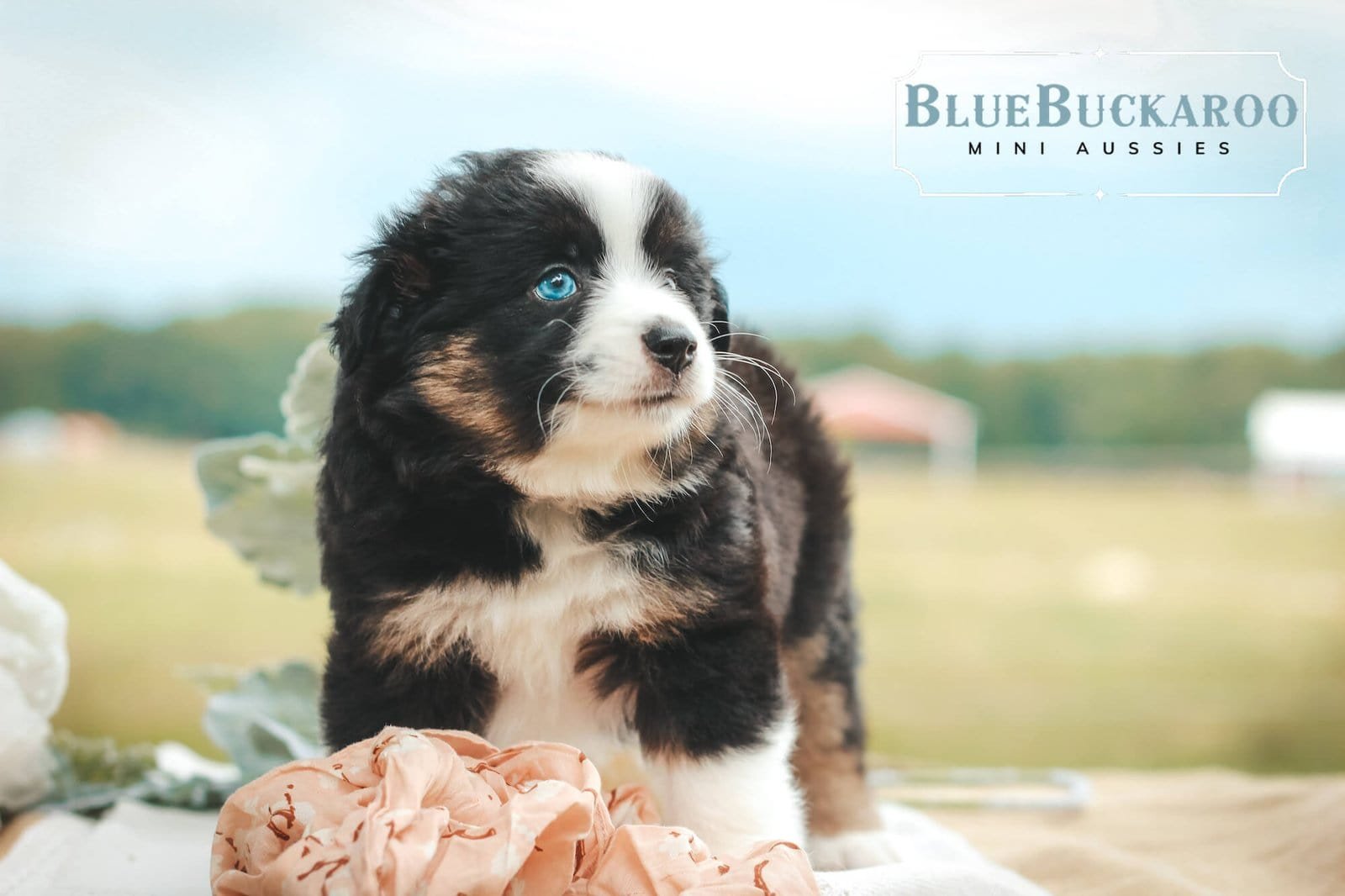
Socialization does not mean “make your puppy love everyone.”
It means teaching your puppy that the world is full of people, dogs, noises, surfaces, movement, vehicles, children, strange objects, new places—and none of them automatically require a crisis or an interaction.
“I don’t need my dog to love everybody. I need my dog to be able to handle almost anything.”
One of the most common things new puppy owners tell me is, “I want to make sure I socialize my puppy really well.” Good. The problem is that somewhere along the way, socialization started meaning: take your puppy everywhere, let everyone pet them, let them greet every dog, and put them in the middle of everything so they “get used to it.”
After raising Mini Aussies for more than 18 years, that is not the dog I’m trying to build.
A Puppy Who Needs Access
- Pulls toward every dog
- Launches at every person
- Cannot watch children without joining in
- Frustrates when greetings are denied
- Believes exciting things are more important than you
A Puppy Who Can Be Neutral
- Notices another dog and keeps moving
- Sits while a stranger talks to you
- Watches children without chasing
- Recovers quickly after something surprising
- Can reconnect with you around distractions
Exposure is not the same thing as interaction.
A well-socialized puppy doesn’t have to physically meet everything they see. In fact, constantly allowing greetings can accidentally teach a smart, social puppy that every interesting thing is available to them.
Then one day you need to walk past another dog. Or sit quietly while someone talks to you. Or take your dog to a child’s sporting event without letting them greet the entire sideline.
That is where neutrality becomes far more useful than friendliness.
Instead of asking, “How many people did my puppy meet today?” ask, “What did my puppy learn about the world today?”
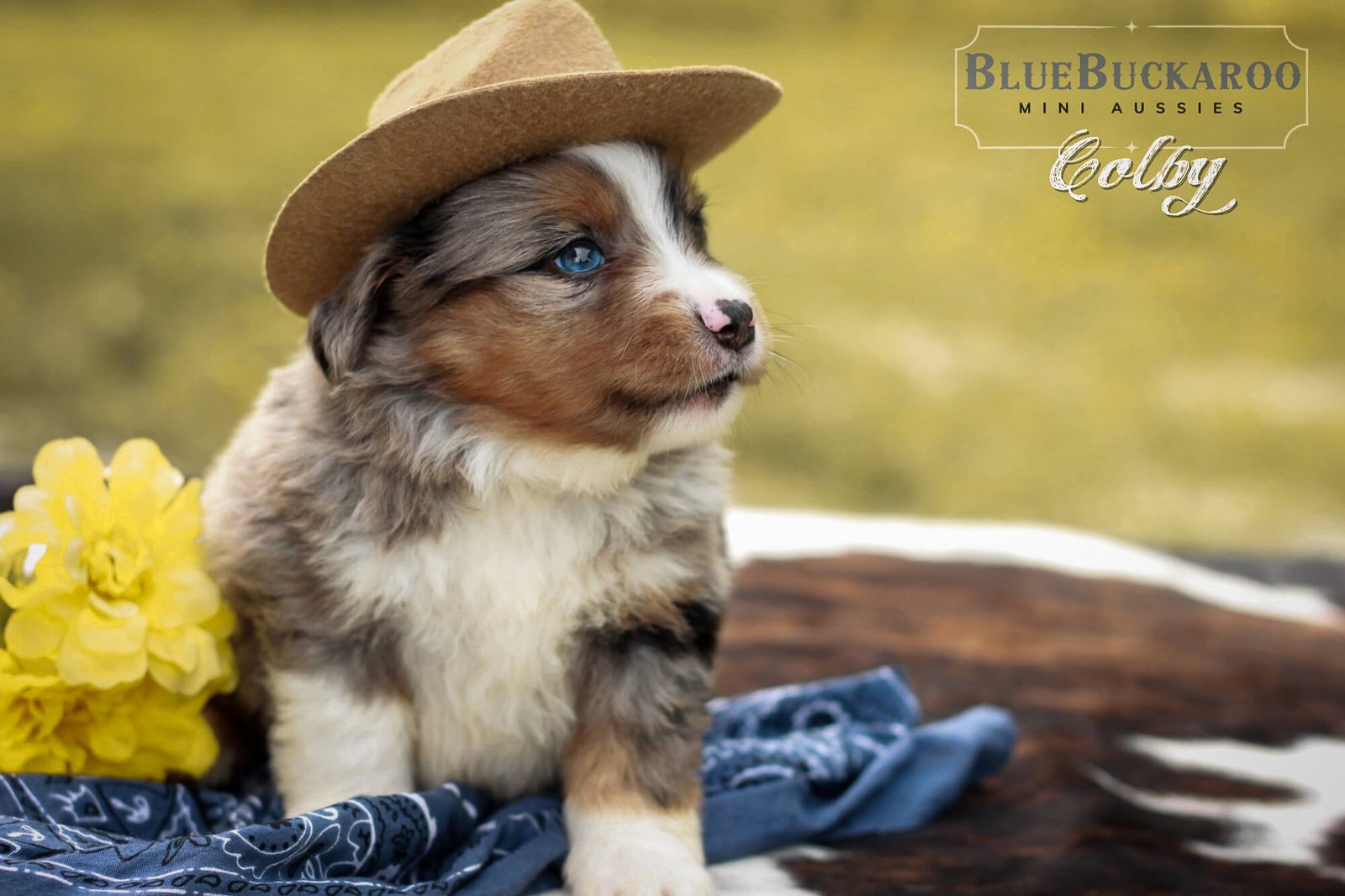
The first months matter. That doesn’t mean cramming in 100 experiences before lunch.
Puppies are forming powerful impressions about what is normal, what is safe, and how they should respond to the world around them. That makes early exposure important—but it also makes the quality of those experiences important.
This is where owners sometimes panic. They see a “100 things before 16 weeks” checklist and turn Saturday into puppy socialization boot camp: store, soccer field, neighbor’s dog, three children, patio, traffic, grandma’s house.
By late afternoon the puppy is fried.
A puppy who is overwhelmed is not necessarily learning, “This is safe.” They may be learning, “I cannot escape this.” Slow down enough for the puppy to actually process what is happening.
See it. Process it. Recover.
This is a much more useful way to think about socialization than simply counting exposures.
See It
Your puppy notices something new: a bicycle, toddler, horse, umbrella, shopping cart, barking dog, garbage truck, person using a walker. Do not immediately rush toward it.
Process It
Can your puppy look, sniff, take food, move normally, and check back in with you? If they freeze, flee, refuse food, shake, or cannot disengage, increase distance.
Recover
A confident dog is not a dog who is never startled. I care about how quickly they can evaluate something surprising and return to normal.
Startle → evaluate → recover. That recovery skill is one of the most useful things you can build in a young dog.
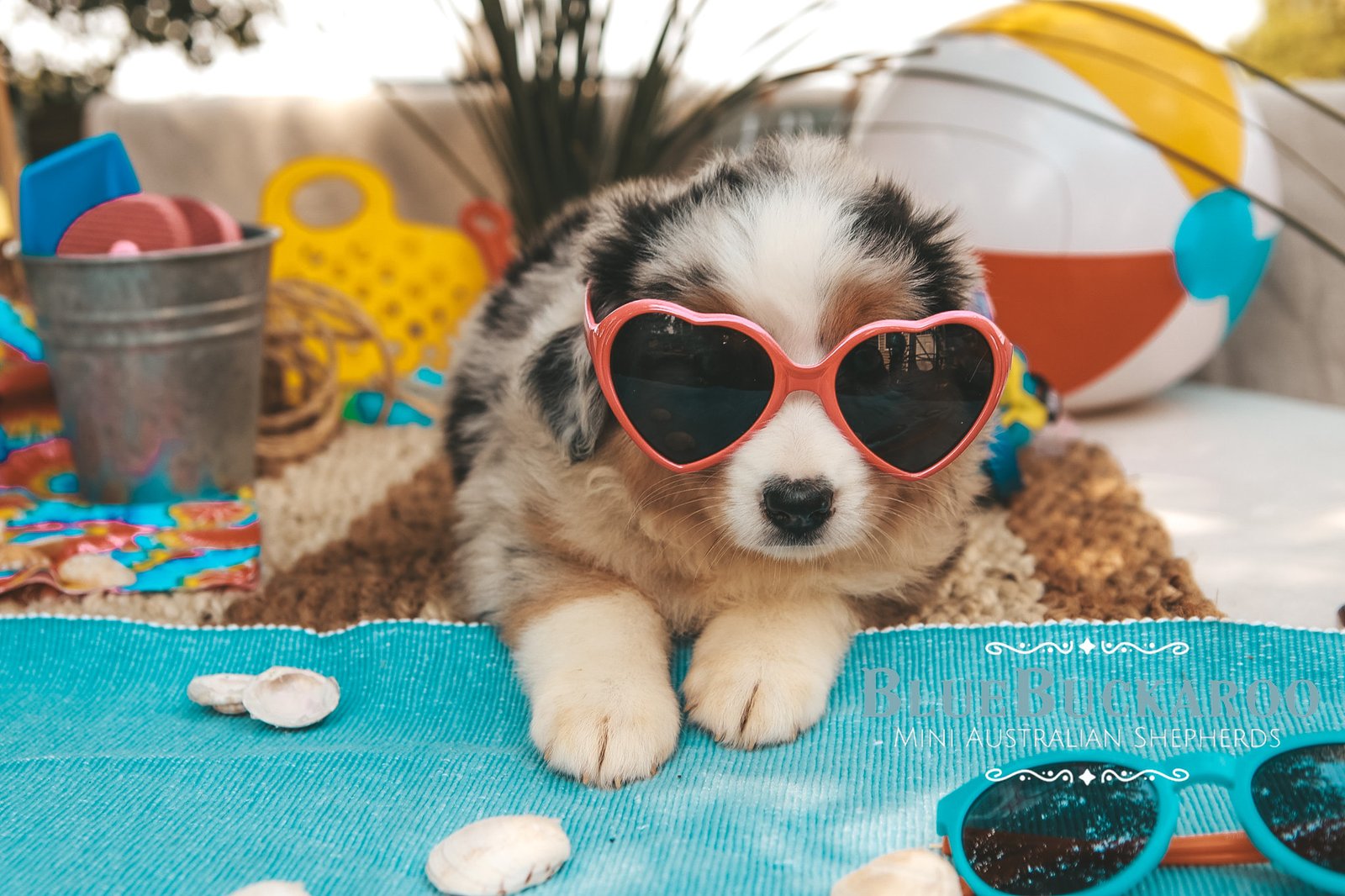
Stop letting everyone pet your puppy.
Your puppy does not belong to the public.
If your puppy wants to greet someone, the person is appropriate, and you want the interaction—fine. But you do not have to hand your puppy to every stranger who sees a fluffy merle puppy and asks to pet them.
Sometimes the better lesson is simply:
People can exist near me without anything happening.
That is socialization. In fact, for a dog who will spend the next 12–15 years moving through human environments, it is excellent socialization.
Your puppy does not need to greet every dog either.
I would rather have a handful of excellent interactions with safe, appropriate dogs than dozens of random leash greetings.
You do not know every strange dog’s temperament, tolerance, health status, or play style. And your puppy doesn’t need to learn that seeing a dog means pulling toward it.
Walk past dogs. Watch them from a distance. Train near them. Reward check-ins. Let your puppy learn that dogs can exist without being accessible. Then intentionally choose appropriate dogs for actual interaction.
Don’t ask what your puppy has “met.” Ask what they can handle.
Can your puppy walk past one without dragging you toward it?
Can they sit beside you while someone talks without launching into the person’s lap?
Can they watch children run and play without chasing or herding them?
Can they hear something loud, orient to it, and recover?
Can they enter a new environment and still eat, think, sniff, and listen?
Can someone touch paws, ears, mouth, collar, and body without a wrestling match?
Can they cross slick floors, grates, gravel, steps, bridges, or wobbling surfaces?
Can they travel, settle, and arrive somewhere without the entire event becoming chaos?
Can they look at something exciting and then choose to reconnect with you?
nothing.
Take your puppy somewhere safe. Sit on a bench. Sit in the back of your vehicle. Sit outside a store. Sit at the edge of a child’s sporting event.
Let the world move around you.
Reward your puppy for checking in. Reward calmness. Let them sniff. Let them observe.
Then leave.
You do not have to manufacture an interaction. For an observant Mini Aussie, learning that watching does not require participating is an incredibly useful skill.
Don’t forget the boring stuff.
Some of the most important socialization experiences will never make a cute Instagram Reel:
- Touching paws
- Looking in ears
- Opening the mouth
- Holding the collar
- Brushing
- Nail handling
- Brief restraint
- Standing for an exam
These skills make veterinary visits, grooming, nail trims, emergencies, and ordinary care dramatically easier later.
Short. Calm. Positive. Then move on.
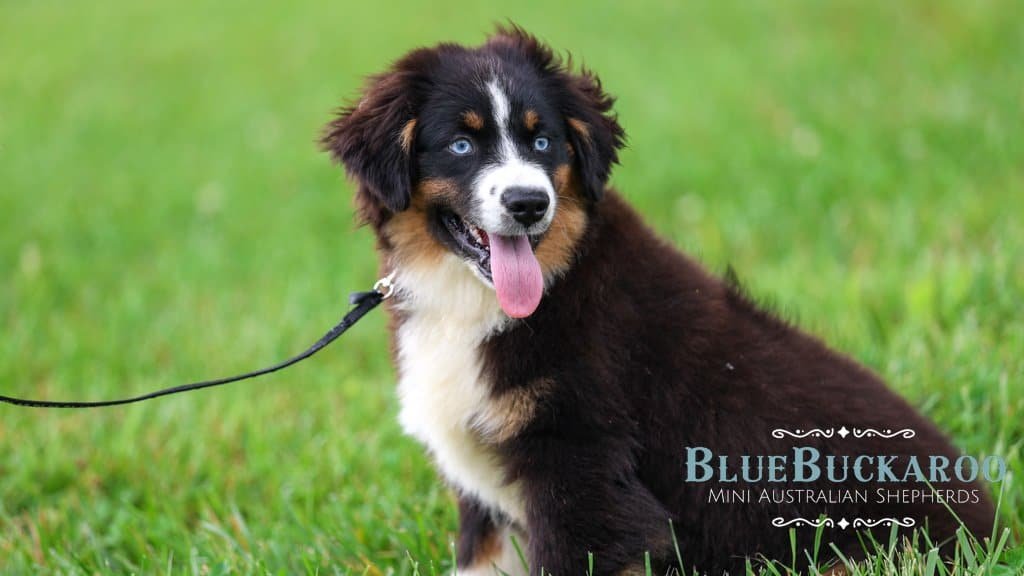
Socialize to the life your dog will actually live.
Generic checklists are useful prompts, but your puppy does not need to be prepared for somebody else’s life.
Farm Life
Livestock, tractors, gates, machinery, barn noises, trailers, uneven ground, and learning when not to chase.
City / Nashville
Traffic, patios, crowds, automatic doors, elevators, carts, delivery trucks, music, and people moving close by.
Families
Children running, yelling, balls, bicycles, guests, toys on the floor, strollers, and learning calm around chaos.
Outdoor Dogs
Water, docks, trails, bridges, different terrain, camping, boats, wildlife, and settling after activity.
Travel Dogs
Car rides, hotels, luggage, elevators, unfamiliar rooms, parking lots, rest stops, and sleeping somewhere new.
Every Puppy
Grooming, vet handling, household noises, surfaces, confinement, car travel, strangers, dogs, and learning to recover.
You do not have to choose between behavioral development and disease prevention.
The socialization period overlaps with the time puppies are still completing their early vaccine series. That does not mean placing an incompletely vaccinated puppy on the floor of every dog-heavy public space.
Safe exposure can include carrying your puppy in higher-risk areas, visiting clean private homes, spending time with known healthy dogs, using controlled training environments, sitting in the vehicle with the hatch open, or simply watching the world from a safe location.
Ask your veterinarian about infectious disease risk where you live, then build a socialization plan that gives your puppy useful exposure without unnecessary risk.
Don’t drag them closer. Change the distance.
If your puppy sees something at ten feet and cannot cope, move to thirty. If thirty still feels too hard, try sixty.
Find the distance where your puppy can notice the thing and still think.
You are not “letting the puppy win” by creating distance. You are creating a learning opportunity their nervous system can actually process.
Confidence is not fearlessness. Dogs can startle. They can hesitate. They can have preferences. The goal is to teach:
New does not automatically mean dangerous.
I do not have to solve every situation alone.
I am allowed to look and then move on.
A surprising moment does not need to ruin the rest of my day.
Dogs, people, and movement can exist without my involvement.
The environment can be interesting without making my handler disappear.
Raise the dog you actually want to live with.
Socialization is one piece. The Ultimate Puppy Guide walks you through the first night, routines, housebreaking, crate training, biting, health, feeding, enrichment, behavior, and the real-life problems that show up after the puppy comes home.
Puppy Socialization FAQs
What does puppy socialization actually mean?
It means helping a puppy develop comfortable, appropriate responses to people, animals, environments, handling, noises, surfaces, movement, and ordinary life—not simply having them greet as many people and dogs as possible.
Should my puppy meet every dog?
No. A few good interactions with known, appropriate dogs are more useful than teaching your puppy that every dog they see is available for greeting.
Should everyone pet my puppy?
No. Letting strangers exist without interaction is valuable socialization. You can choose which greetings are useful and decline the rest.
What is neutral socialization?
Neutrality means your puppy can notice something interesting—a person, dog, child, animal, noise, or object—without needing to approach, flee, bark, chase, or otherwise react strongly.
What if my puppy is scared of something?
Increase distance until your puppy can observe while remaining able to eat, sniff, move, and think. Build confidence gradually rather than forcing closer contact.
Can I socialize my puppy before vaccines are finished?
Yes, with appropriate risk management. Use controlled environments, known healthy dogs, clean private spaces, carrying, car observation, and guidance from your veterinarian about local disease risk.
How much socialization should I do in one day?
There is no magic number. A few short, successful exposures are usually more useful than an exhausting day packed with new experiences.
How do I know if my puppy is overwhelmed?
Watch for freezing, fleeing, tucked posture, refusing food, shaking, frantic barking, inability to disengage, or a puppy who stops exploring and thinking normally.
Build the rest of the puppy foundation.
Make them confident. Teach neutrality. Build recovery.
The goal isn’t a puppy who has touched everything in the world. It’s a dog who can move through that world calmly, adapt when things change, and still remember that you matter.
Follow the Daily Adventures of Our Blue Buckaroo Puppies
See puppy videos, training moments, behind-the-scenes updates, and everyday life with our Mini Aussies.