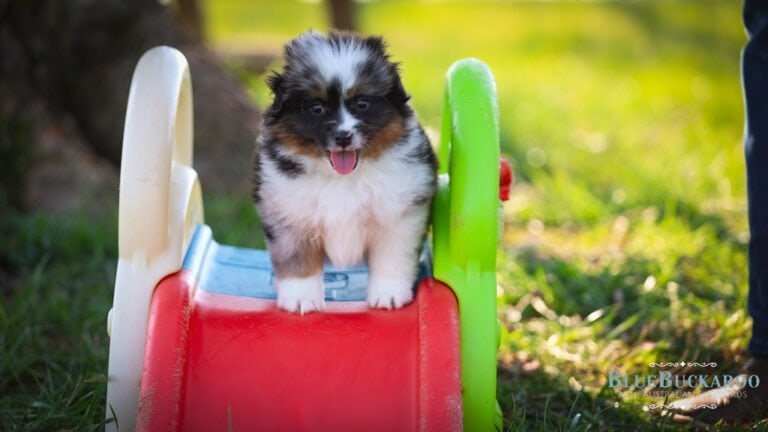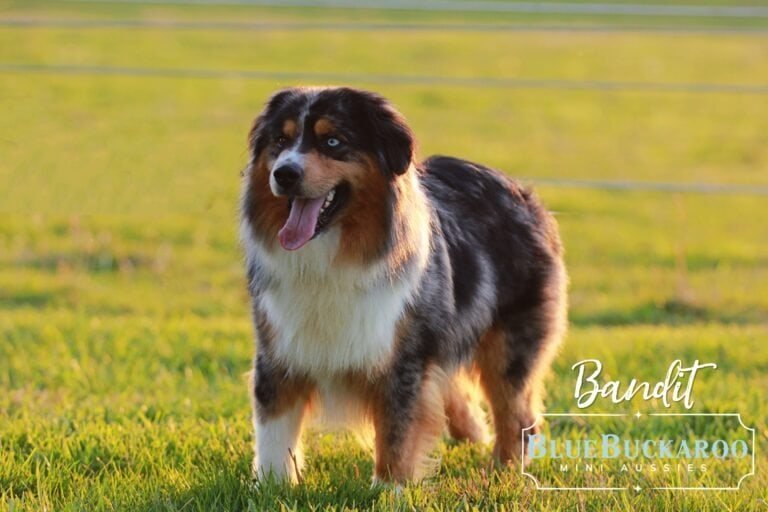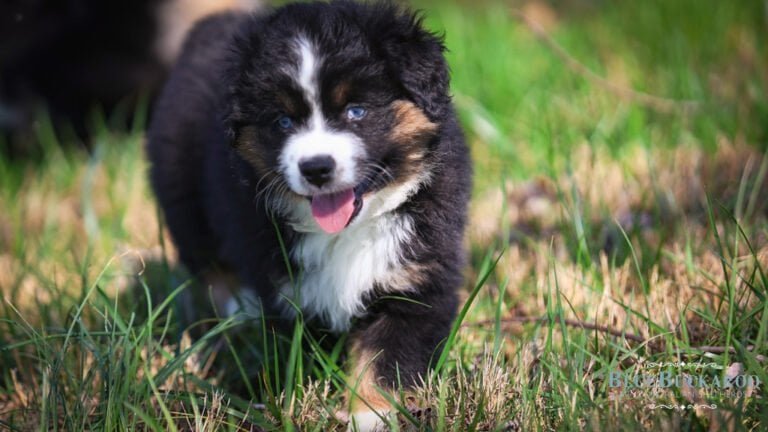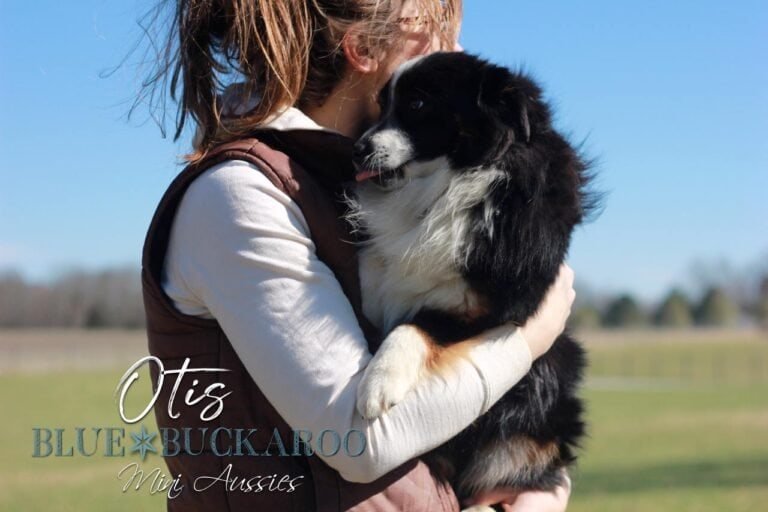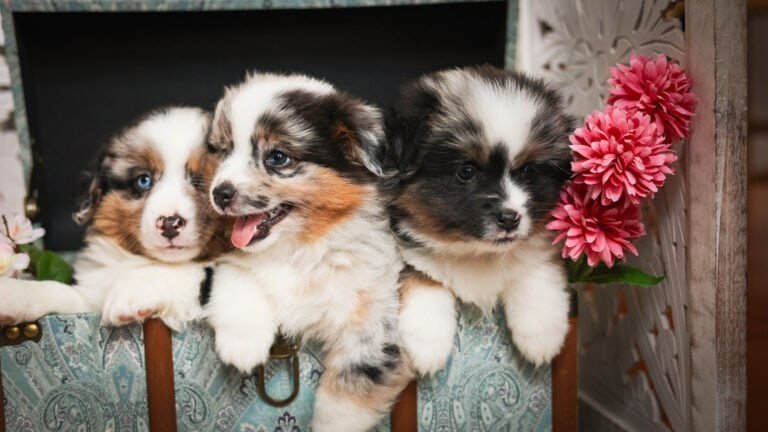
Mini Aussies come in some of the most stunning coat colors in the dog world. Blue merle, red merle, black tri, red tri — and occasionally a bi-color that stops people in their tracks. Add in the eye color possibilities and you have a breed that’s basically impossible to walk past without doing a double take.
This guide covers every color and marking combination you’ll see in the breed, what actually causes them genetically, what the eye color options look like, and what color does and doesn’t tell you about a dog. The genetics here are sourced and fact-checked against the Australian Shepherd Health & Genetics Institute — there’s a lot of misinformation floating around about Aussie colors and eyes, and we’d rather give you the accurate version.
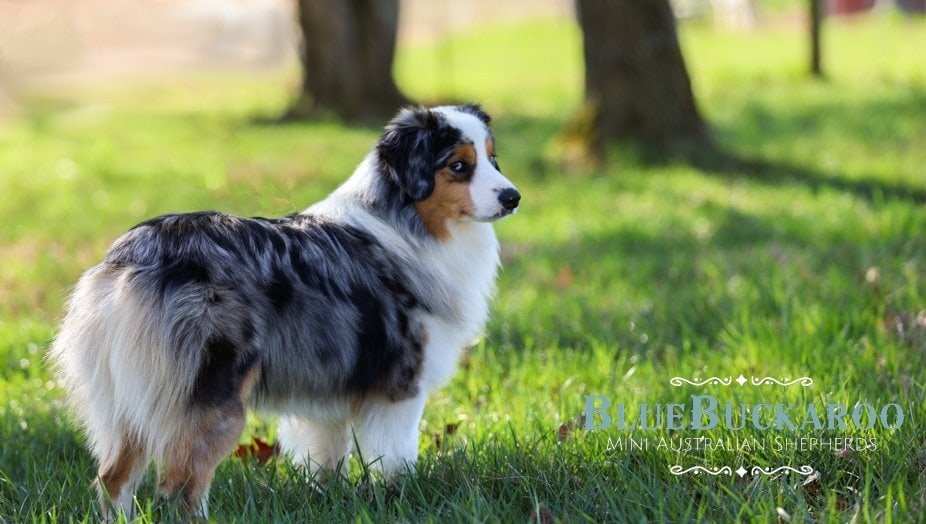
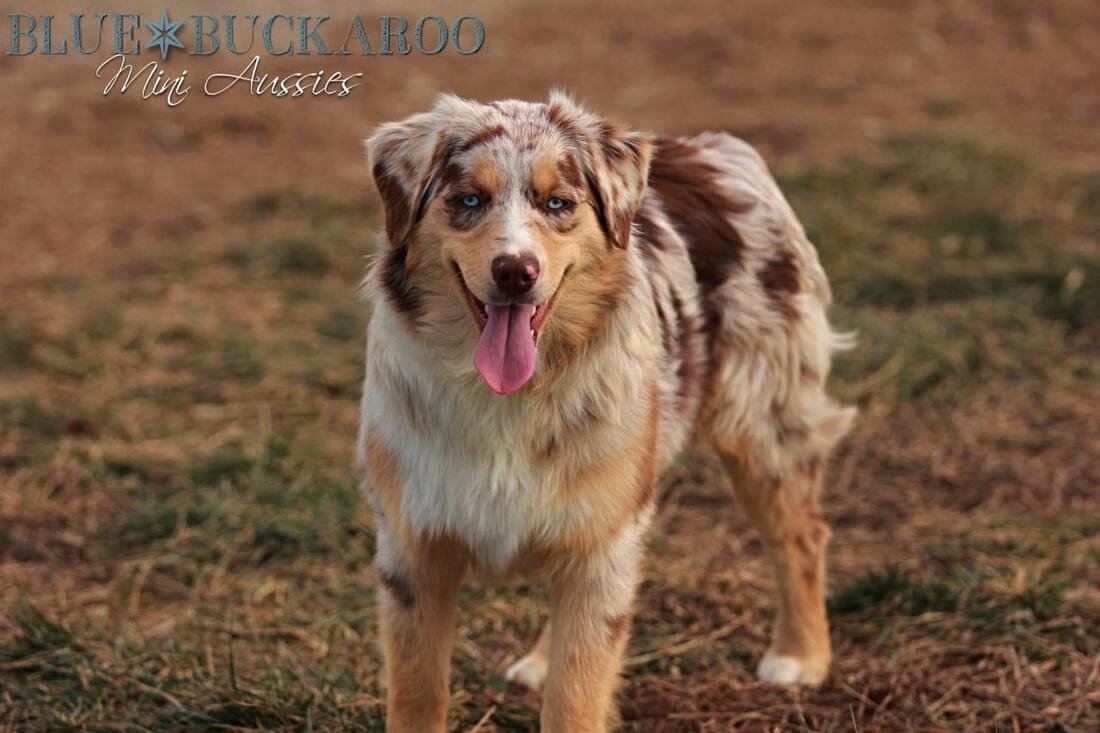
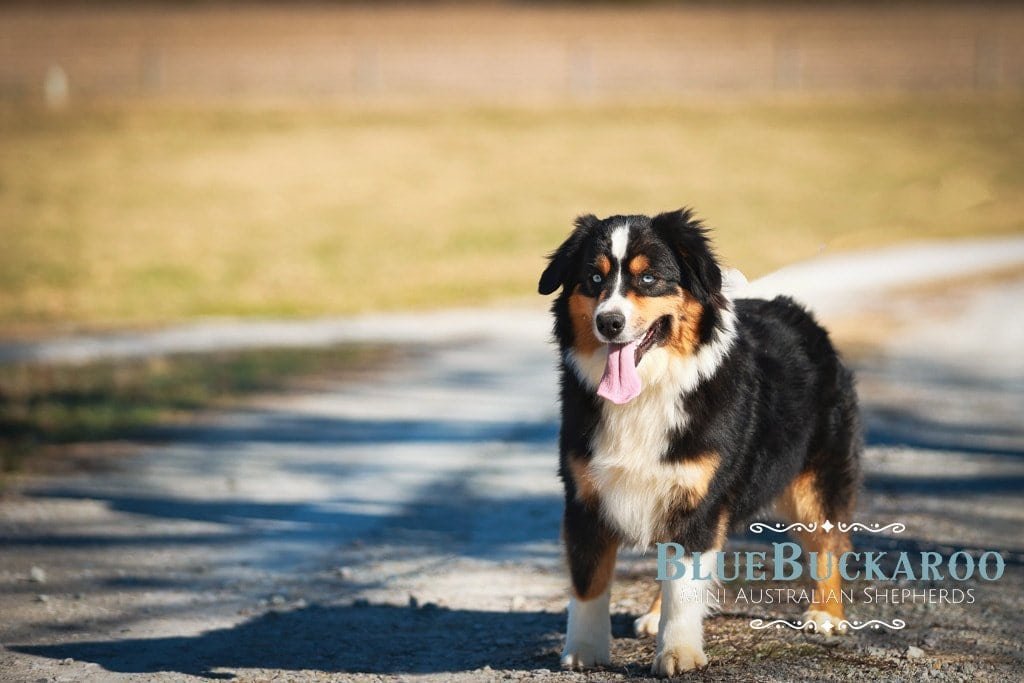
The Four Recognized Colors
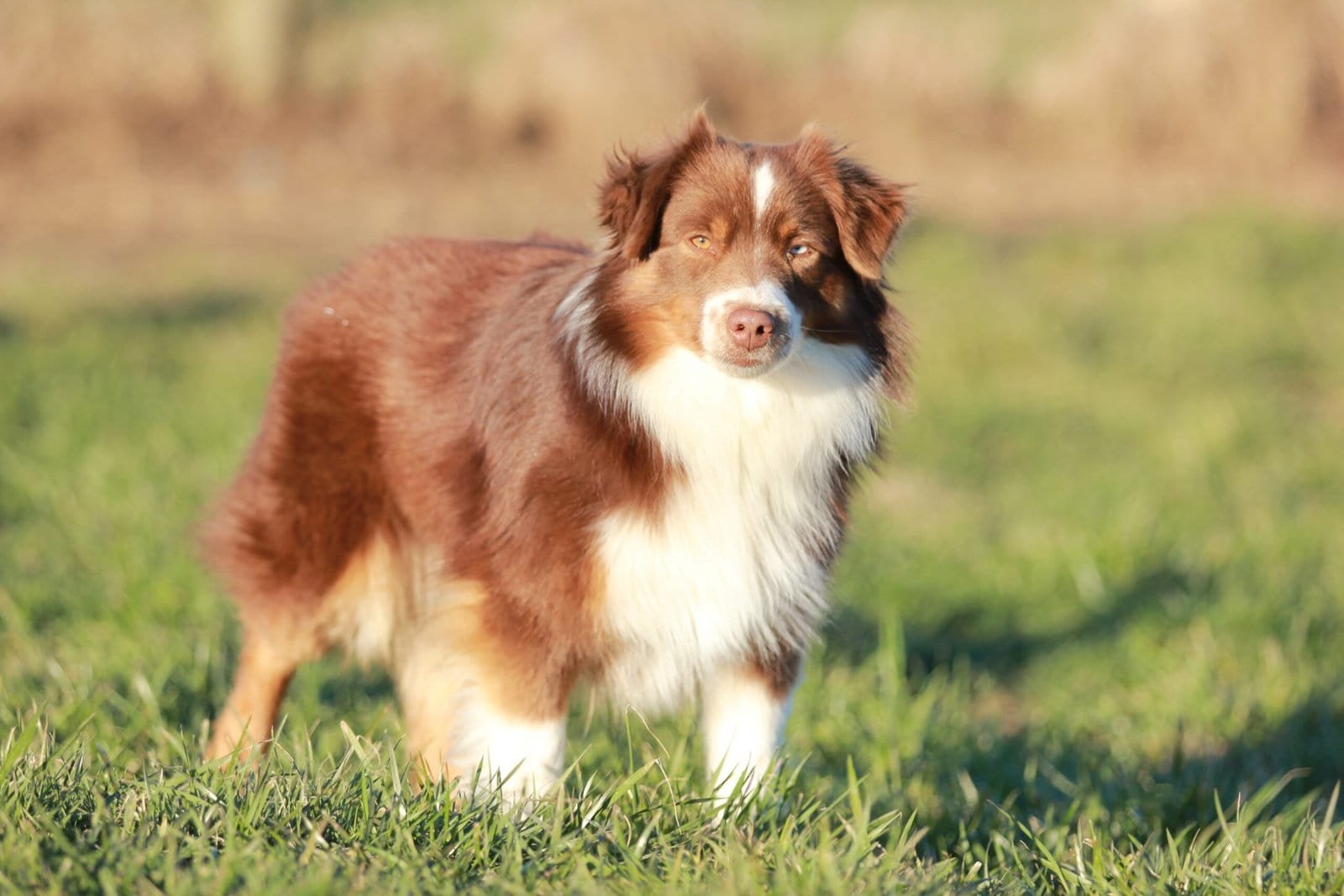
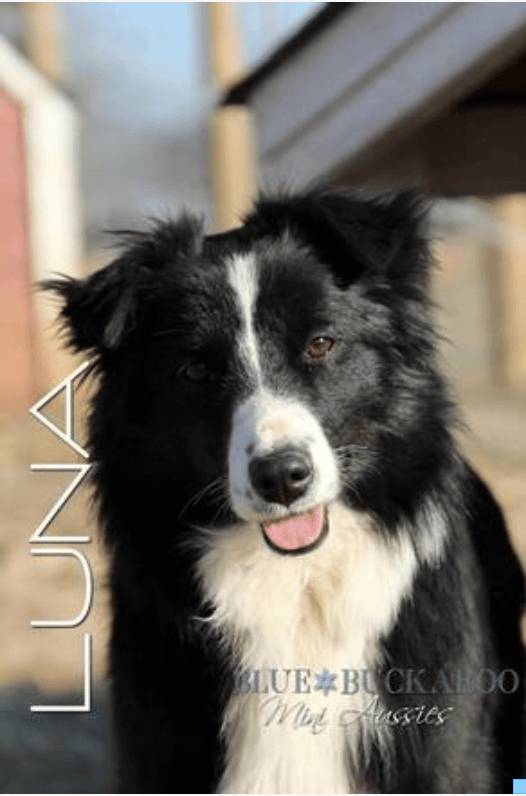
According to breed standards, Australian Shepherds come in some combination of two base colors (black and liver/red), one pattern (merle), and two trim colors (white and tan). Every coat color you see in the breed — no matter how unique it looks — is a combination of these elements.
Eye Color — The Full Range
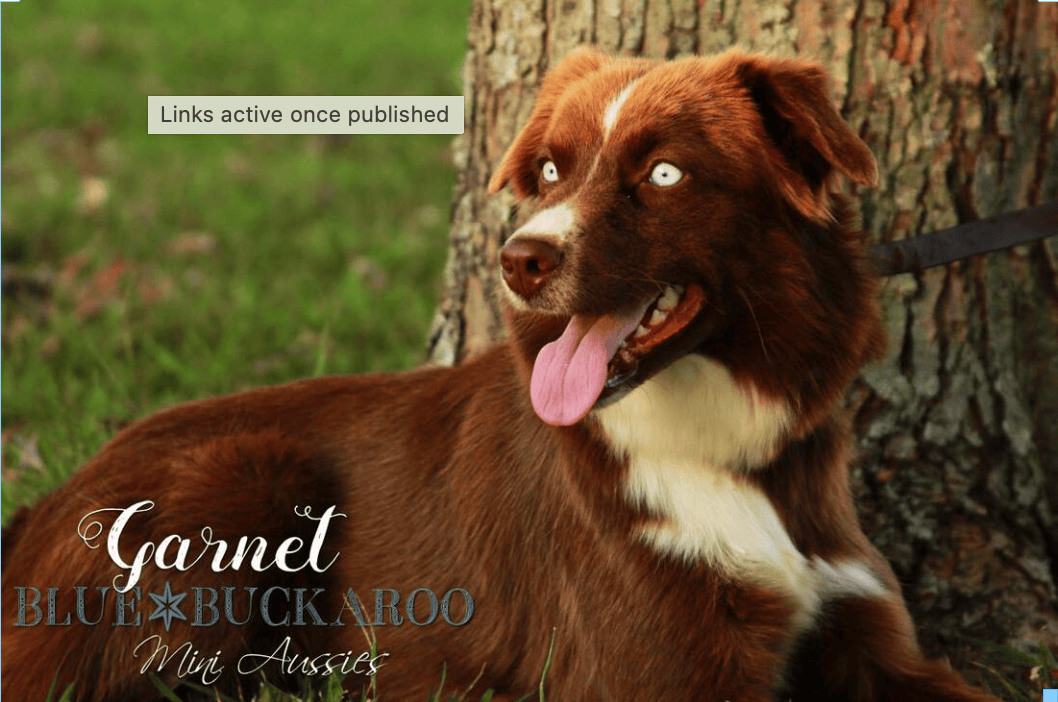
Mini Aussies can have brown eyes, blue eyes, amber eyes, marbled eyes (two colors swirled within one iris), split eyes (one half one color, one half another), or two entirely different colored eyes — one blue, one brown. Any combination is possible and all are considered normal and correct within the breed.
Let’s Clear Up the Blue Eyes Myths — All of Them
There are three separate myths about blue eyes in Aussies that we hear constantly. All three are false. Let’s deal with them directly.
Myth 1: Blue eyes mean poor eyesight or vision problems
Completely false. Blue eyes in Australian Shepherds are a pigmentation variation — not a structural eye defect and not a health issue. A dog with naturally blue eyes from normal Aussie genetics sees perfectly well.
According to the Australian Shepherd Health & Genetics Institute, blue-eyed non-merle Aussies have eyes that are completely sound. They may be very slightly light-sensitive in the same way blue-eyed people are slightly more light-sensitive than brown-eyed people — but that is the full extent of any difference. There is no vision impairment, no increased risk of blindness, and no structural abnormality associated with normal blue eye color in this breed.
The eye health concerns that do exist in Aussies — such as Collie Eye Anomaly — are entirely unrelated to eye color.
Myth 2: Blue eyes only occur in blue merles
Also false. Any color of Mini Aussie can have blue eyes. A black tri can have two piercing blue eyes. A red tri can have one blue and one brown. A solid-colored dog can carry and pass blue eye genetics without ever expressing the merle pattern.
Blue eyes in merles and blue eyes in non-merles come from different genetic mechanisms — they just produce the same visual result. The ASHGI confirms that blue eyes in non-merles are entirely separate from the merle gene and are fully correct per breed standards. If you want a dog with blue eyes, you do not need to limit yourself to blue merles.
Myth 3: Blue eyes mean the dog is deaf
This one likely stems from confusion with deafness caused by white markings on or around the ears. That form of deafness is pigment-related and concerns the absence of pigment cells in the inner ear. It is associated with white ear markings — not with blue eye color.
Blue-eyed non-merle Aussies are not prone to congenital deafness. A dog can have blue eyes and completely normal hearing. A dog can have brown eyes and white ear markings and be at risk for deafness. The eye color is not the relevant factor — the ear pigmentation is.
What Are Copper Points?
Copper or tan points are the warm reddish-brown markings that appear above the eyes, on the cheeks, the legs, and under the tail. They’re what makes a dog a “tri” — three colors. Black tri = black + white + copper. Blue merle tri = blue merle + white + copper.
Dogs without visible copper points are called bi-colors. The genetics behind the absence of tan trim can be either dominant or recessive depending on the gene involved — so bi-colors don’t all work the same way genetically, even if they look the same visually. Some can produce tri-colored offspring depending on the specific gene variant at work in that line.
Butterfly nose: Some puppies — especially merles — have a partially pink nose at 8 weeks. This is called a butterfly nose and is common in puppies. It is not faulted before one year of age, and in most dogs the pigment fills in fully as they mature.
An important note on double merles
A double merle is a dog that has inherited two copies of the merle gene — one from each parent. This only happens when two merle dogs are bred together. Double merles virtually always have abnormally developed eyes, which are frequently blind. They may also be deaf due to lack of pigment in the inner ear.
You may see double merles referred to online as “lethal whites.” This term is inaccurate — the Australian Shepherd Health & Genetics Institute specifically notes that lethal conditions typically prevent reproduction, which is not the case here. The correct term is double merle. These dogs do have serious disabilities and should not be bred.
Older sources suggested double merles were prone to additional heart and digestive problems. Current understanding indicates this was likely an artifact of the specific dogs studied, not a reliable characteristic of double merles as a group. The confirmed issues are eye defects and potential deafness — both serious enough on their own.
At Blue Buckaroo we do not breed merle to merle. If you see a listing for an “all white Aussie,” a “white merle,” or a “lethal white” — that is a double merle. Walk away.
Color Doesn’t Make the Dog
Coat color has nothing to do with temperament, intelligence, trainability, or health. A blue merle is not smarter than a black tri. A red merle doesn’t have a better personality than a red tri. The merle pattern doesn’t carry any special qualities beyond the visual — and the solid colors don’t lack anything the merles have.
We see this play out in searches constantly — blue merle is by far the most searched color in the breed. Blue merles are beautiful, no question. But so are red tris. And black tris. And red merles. The families who end up most satisfied with their dogs are almost always the ones who chose based on temperament fit and program quality, not coat color.
That said — it is really, really fun to collect all the colors. We fully support this as a life goal. There’s a reason our families keep coming back for a second, third, and fourth Blue Buckaroo puppy in a different color. Once you have one, you start seeing gaps in your collection.
At Blue Buckaroo we breed for temperament, structure, and health first. The color is a bonus — a very beautiful, very addictive bonus. If you have a color preference, tell us — we’re happy to factor it into litter matching whenever we can.
Frequently Asked Questions
Can a black tri have blue eyes?
Yes. Black tris, red tris, and bi-colors can all have blue, brown, amber, marbled, or split eyes. Eye color and coat color are determined by separate genetics.
Do blue eyes cause vision problems in Aussies?
No. Blue eyes in Aussies are a pigmentation variation, not a structural defect. According to the Australian Shepherd Health & Genetics Institute, blue-eyed non-merle Aussies have completely sound eyes. They may be very slightly light-sensitive — just like blue-eyed humans — but there is no vision impairment associated with normal blue eye color in this breed.
Are blue-eyed dogs more likely to be deaf?
No. The deafness risk in Aussies is associated with white markings on or around the ears — not with blue eye color. These are completely separate things. A blue-eyed dog without white ear markings has no elevated deafness risk from its eye color.
What’s the rarest Aussie color?
Red tris and bi-colors tend to be less common than blue merles simply because the merle pattern gets the most attention and demand. Within our program all four standard colors are produced regularly. Bi-colors are the least frequent.
Do merles have more health problems than solid-colored dogs?
A single-copy merle does not have more health problems than a solid-colored dog. The significant health concerns arise specifically with double merles — dogs with two copies of the merle gene. A responsibly bred merle from a program that never breeds merle to merle carries no additional health risk from its color.
What does “tri” mean?
Tri refers to three colors — the base color, white markings, and copper/tan points. Black tri = black, white, and copper. Red tri = red, white, and copper. Blue merle tri = blue merle, white, and copper.
Can you predict what colors a litter will produce?
Yes, with reasonable accuracy based on the genetics of the parents. We know our lines and can explain what color combinations a specific pairing is likely to produce. Just ask — we’re happy to walk through it.
Curious what colors our current or upcoming litters are producing? We’d love to tell you.
See Upcoming Litters →