Mini Aussie Puppy Development Stages: What To Expect The First Year
Mini Aussies develop fast. If you know what is coming, the first year feels far less chaotic. This guide walks through each stage from pickup day through adolescence so you can build the dog you actually want to live with.

The first six months shape more than people realize.
Not because the puppy is fragile. Because this breed is absorbing everything. Mini Aussies are wired to notice patterns, test limits, attach deeply, and learn fast. They are always learning, whether you are intentionally teaching them or not.
Mini Aussies develop fast — and if you’re not ready for each phase, it can catch you off guard. This guide walks through what’s actually happening from the day your puppy comes home through their first year, so nothing surprises you. The families who do best with this breed are the ones who know what’s coming.
One thing worth saying upfront: the experience you have with your Mini Aussie is largely shaped by what happens in the first six months. Not because the puppy is fragile — because this breed is absorbing everything. They’re wired to pay attention, and they’re always learning, whether you’re intentionally teaching them or not.
The families who do best with this breed are not the ones with perfect puppies. They are the ones with realistic expectations and consistent structure.
First Days Home
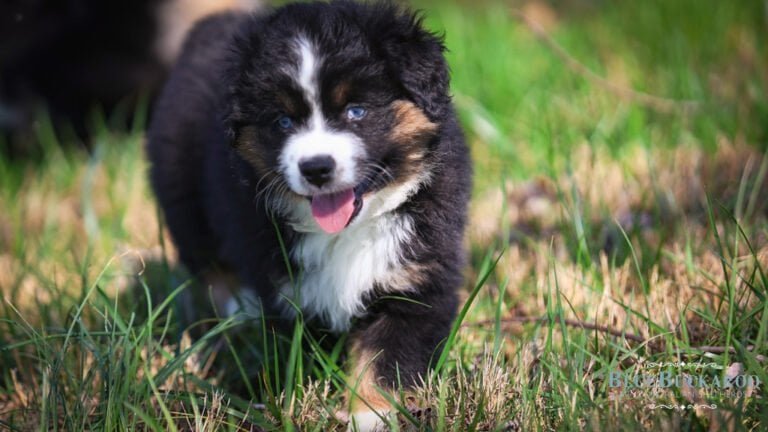
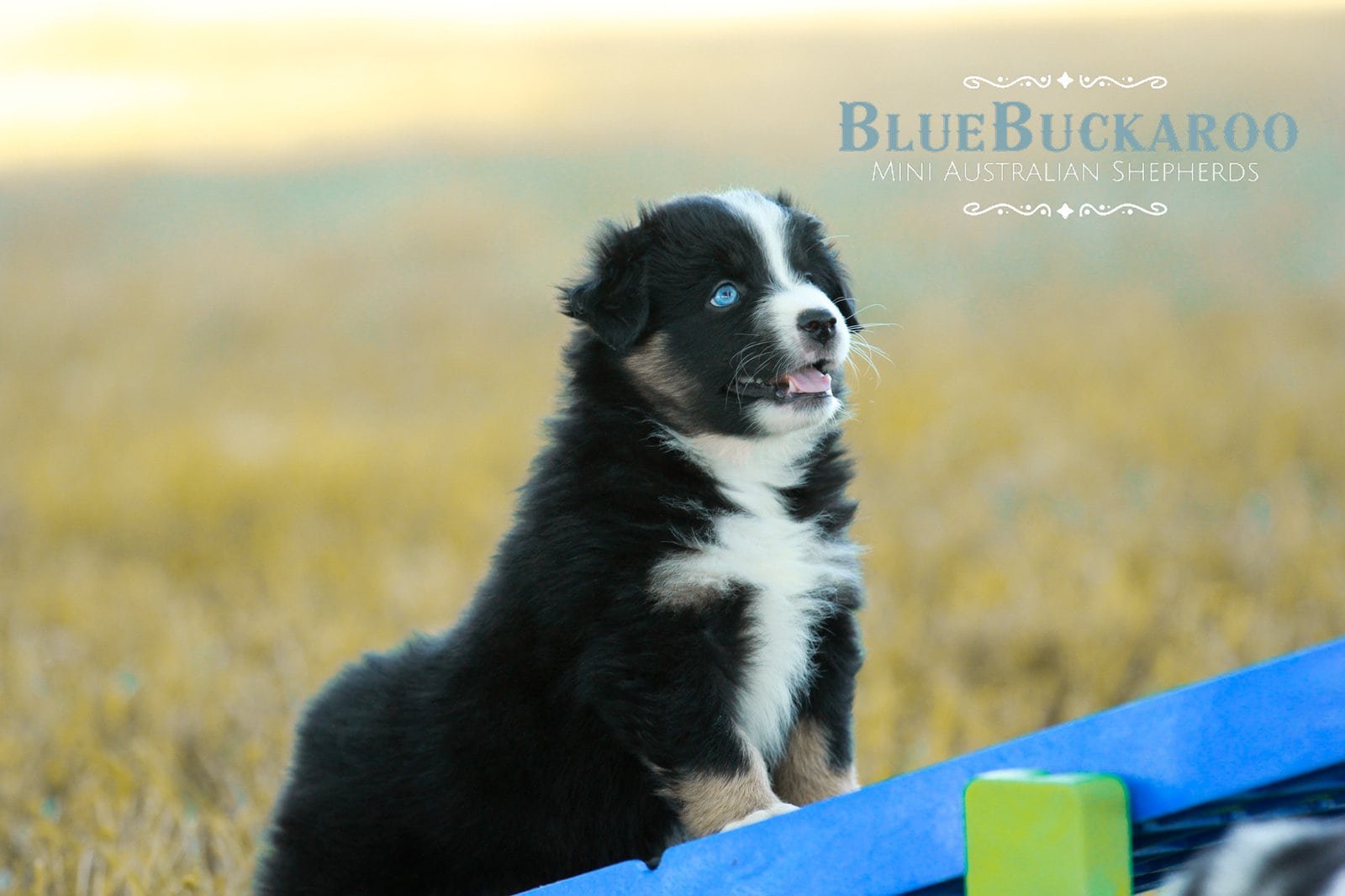
Your puppy just left everything it’s ever known — its mother, its littermates, every familiar smell. Gone overnight. Eight-week-olds are in what behaviorists call the “fear imprint period,” which means how you handle these first weeks matters more than you’d think.
The goal right now is simple: make the world feel safe and predictable. You don’t need to expose your puppy to everything at once. Calm, consistent routines do more work here than any training tool. Sleep needs are high — puppies this age can sleep 16–18 hours a day. That’s completely normal. Let them rest.
A crate set up near where people sleep tends to reduce nighttime crying significantly — the puppy can still sense your presence even if they can’t see you. Keep it close, keep it calm, and don’t overwhelm them the first week.
- Sleep, eat, explore, repeat — that’s basically the whole schedule
- Some pups are bold right away; others need a day or two to warm up
- Mouthing and nipping start now — completely normal, begins to be addressed gently
- Short attention spans — 3–5 minute training sessions max
- Strong bonding to whoever feeds and handles them most
The Socialization Window
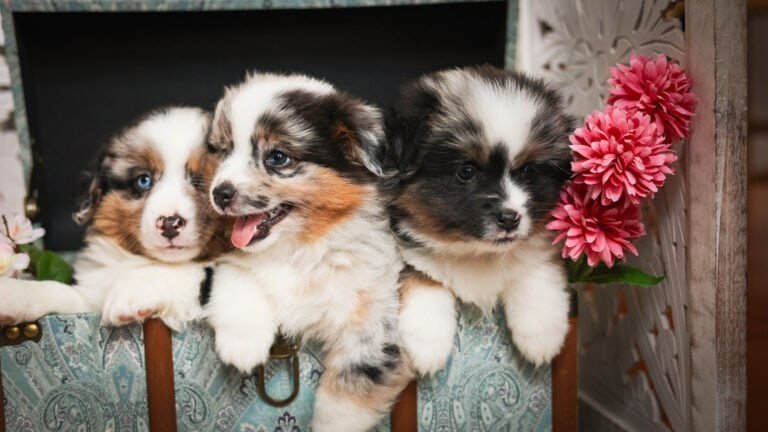
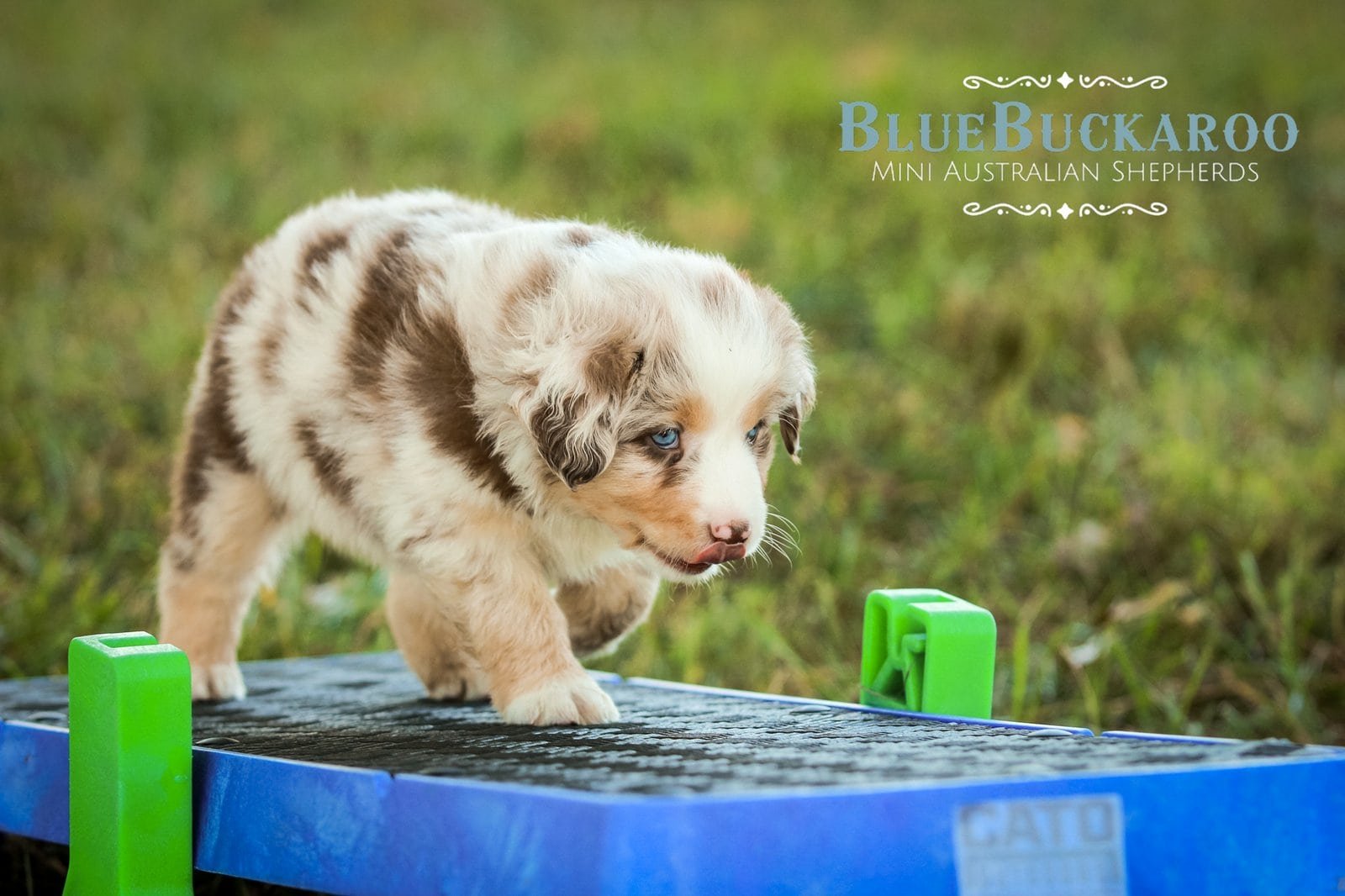
This is the most important developmental window in your puppy’s life — and it closes faster than you think. Researchers identify roughly 3–16 weeks as the primary socialization period. The experiences your puppy has right now leave lasting impressions on how they see the world, for better or worse.
The goal isn’t to expose your puppy to everything all at once. It’s to expose them to a wide variety of things in a way that feels positive or at least neutral. Different surfaces, sounds, people of all ages and appearances, other dogs, vehicles, new environments. Go slow. Watch your puppy’s body language. If they’re shutting down or freezing up, that’s too much — back off, let them recover, and try again another day.
Training starts in earnest here. Mini Aussies at this age are genuine sponges. Sit, down, come, name recognition — all of it can be introduced now with short, reward-based sessions. The single most valuable habit you can build right now is teaching your puppy to check in with you. That attentiveness pays dividends for years.
- Energy starting to ramp up noticeably week by week
- More curiosity — willing to investigate new things independently
- Strong response to positive reinforcement; these dogs love to earn things
- Play drive and toy interest showing up clearly
- Possible brief fear period around 8–10 weeks — passes quickly if handled calmly
A note on vaccines and socialization: You don’t have to wait until your puppy is fully vaccinated to get them out into the world. Carry them in busy areas until vaccines are complete, but get them out. Puppy classes designed for this age group are considered safe and genuinely valuable. The behavioral risks of under-socialization outweigh the disease risks in most real-world situations.
Adolescent Behavior Begins
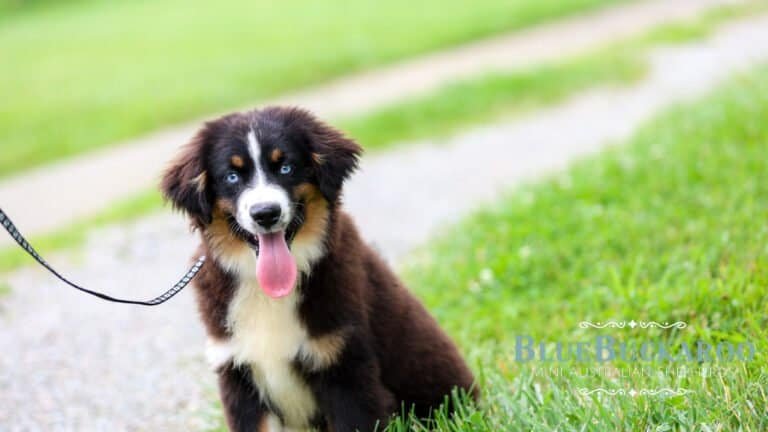
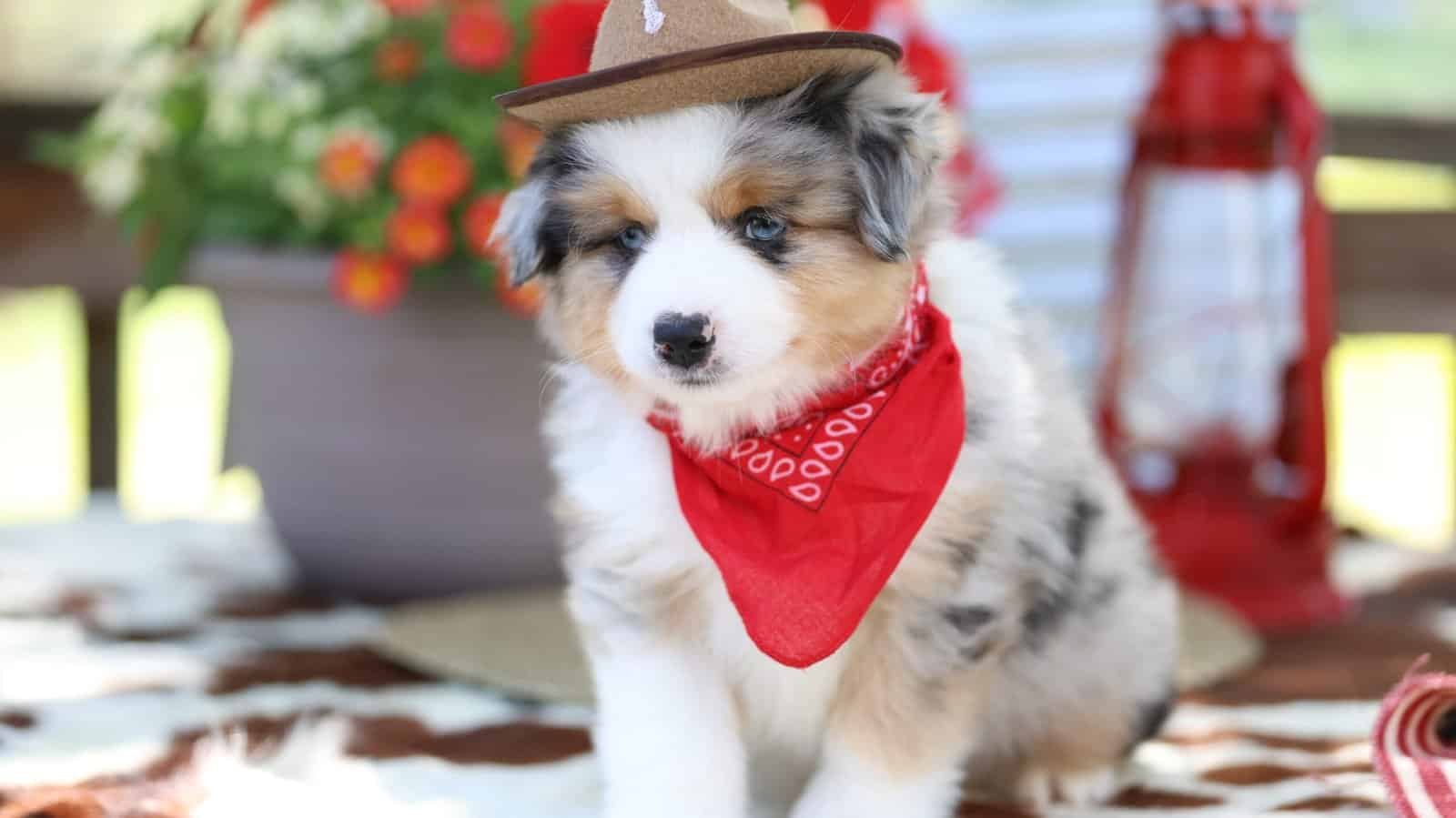
This is where a lot of families get caught off guard. The sweet, responsive puppy from 10 weeks starts testing limits. It’s not defiance — it’s development. Your Mini Aussie is growing fast, hormones are shifting, and the brain is literally reorganizing itself. Some days the training you’ve been doing seems to disappear entirely. It hasn’t. Stay consistent and trust the process.
Physical energy peaks here. Mini Aussies at 4–6 months need real outlets — not just a backyard to run circles in, but structured activity that engages their mind too. A physically tired Aussie who isn’t mentally engaged is still a problem. Training sessions, puzzle feeders, fetch with rules, learning new commands — all of this scratches a different itch than pure physical exercise does.
Teething is in full swing and chewing increases. Manage the environment proactively so they’re chewing appropriate things, and don’t take it personally when something disappears off the coffee table. It’s not spite — it’s a puppy being a puppy.
- “Forgetting” commands they knew cold — stay the course, it’s temporary
- More independent thinking, selective listening
- High play drive, sometimes too rough with kids or other dogs
- Herding instincts surfacing — nipping at heels, circling, stalking
- Another fear period possible anywhere from 6–14 months

Building Toward Maturity
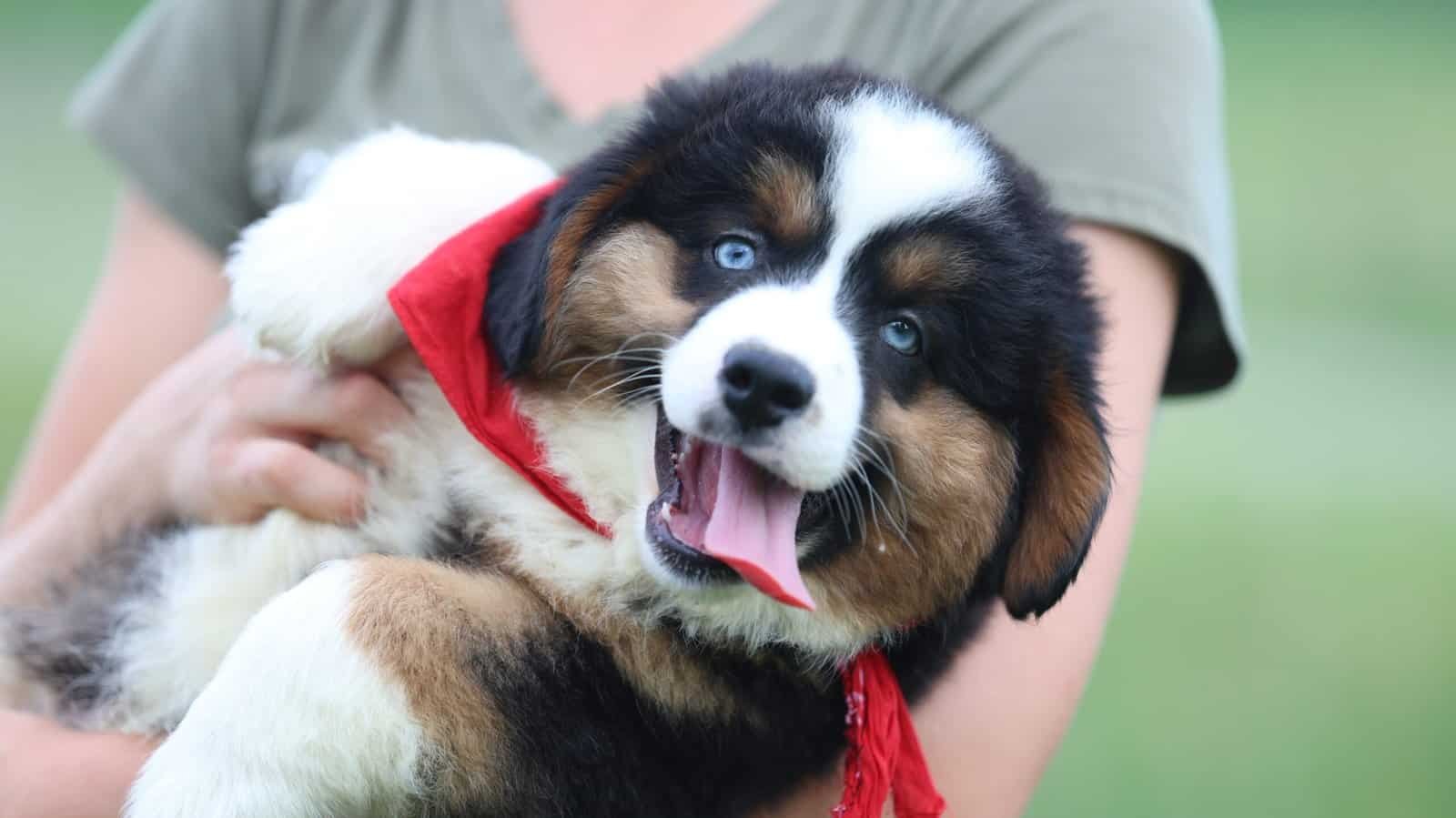
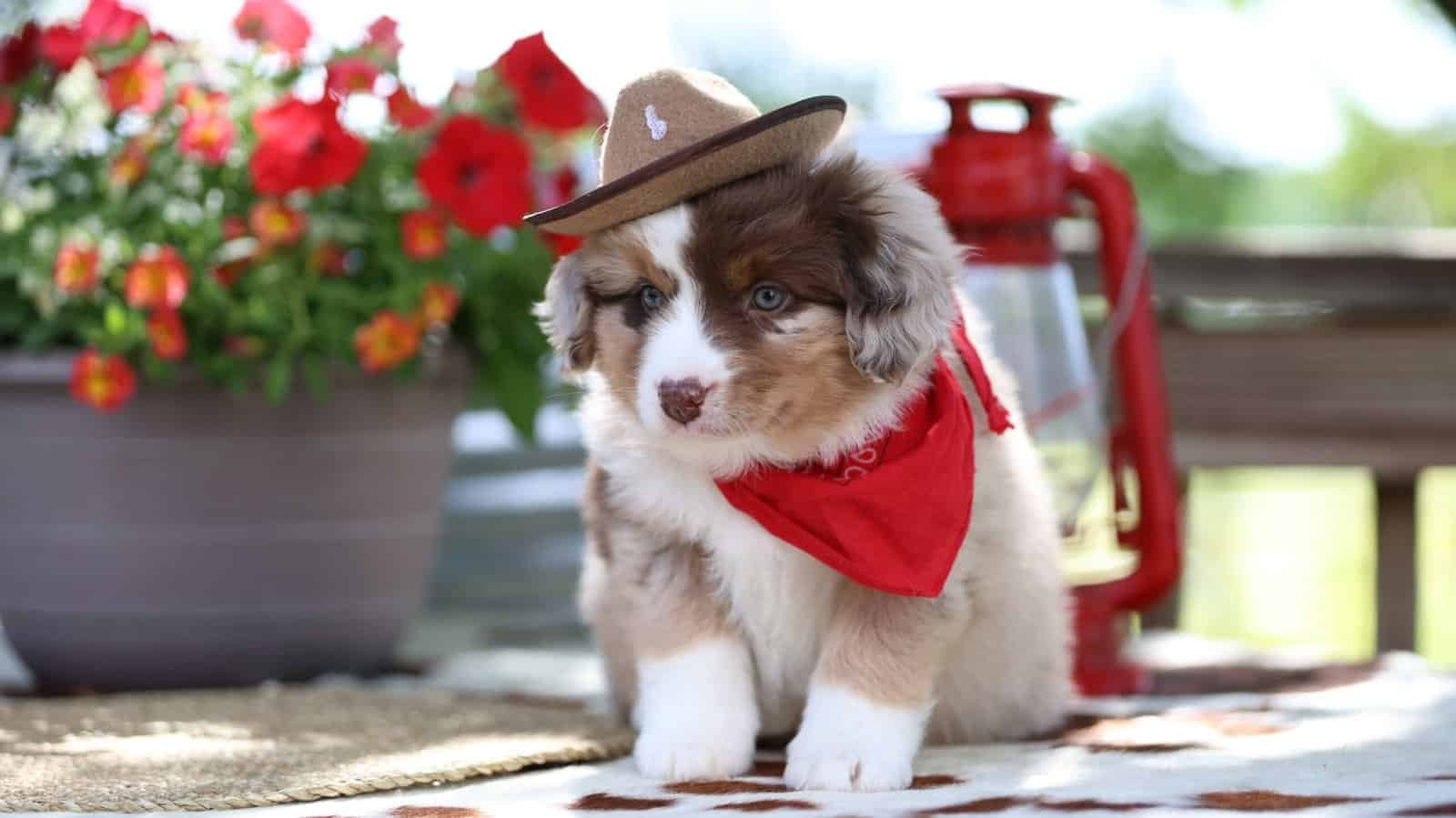
By 6 months your Mini Aussie is near adult size but mentally still very much a puppy. Full mental maturity in this breed typically lands around 18 months to 2 years. That gap matters — it means you have a dog with an adult body and a teenager’s impulse control. Plan accordingly and don’t expect adult-level reliability yet.
The work you’ve put in starts paying off visibly in this window. Dogs who had good early socialization and consistent training become noticeably easier to live with around 9–12 months. The training isn’t done, but the foundation is holding. You can start to see the dog they’re becoming.
If your dog is getting harder to manage rather than easier during this window, it’s almost never the dog’s fault. It’s almost always a gap in structure, exercise, or mental engagement. A positive reinforcement trainer can help you identify where the disconnect is — and it’s almost always fixable.
- Commands getting more reliable and faster — training starting to click
- Bond to family solidifying; strong attachment to their primary people
- Exercise needs stabilizing at adult levels — roughly 45–90 min/day
- Personality fully showing — you can clearly see the dog they’re becoming
- Still capable of serious mischief if consistently under-stimulated
When Do Mini Aussies Calm Down?
This is one of the most searched questions about the breed — and honestly, we get why. The honest answer is: later than you want, and sooner than it feels like when you’re in the thick of it.
Most Mini Aussies start showing consistent, genuine calm around 18 months to 2 years. You’ll notice it in small ways first — they settle faster after activity, they stop demanding your attention as constantly, they choose to rest on their own instead of finding trouble. The drive and intensity are still there, but they become manageable. Even enjoyable.
A few things that genuinely move the needle: structured daily exercise, mental engagement through training or puzzle work, a predictable routine, and clear boundaries established early. Mini Aussies don’t calm down just because they age out of it. They calm down because they have a life that consistently meets their needs.
Some dogs take longer than others. Intact males tend to stay more reactive and high-energy through adolescence. Dogs raised without consistent structure don’t develop good self-regulation habits the way structured dogs do. If your Mini Aussie is still bouncing off the walls at 2 years, look hard at their daily life before assuming it’s just their nature.
A Few Things Worth Knowing
None of this is meant to scare you off the breed. Mini Aussies raised with structure and engagement are extraordinary family dogs — loyal, responsive, and genuinely fun to live with. What we’re trying to do is set you up for the version of this breed that thrives, not the version that ends up overwhelmed in rescue.
The families who have the best experiences with their Blue Buckaroo puppies are the ones who came in with realistic expectations, invested in early training, and gave their dog a life that matched what the breed was built for. That’s it. It’s really not more complicated than that.
Mini Aussie Puppy Development FAQs
When do Mini Aussies calm down?
Most begin showing genuine, consistent calm around 18 months to 2 years. They do not simply age out of intensity. They settle best when their daily life includes exercise, training, mental work, and clear boundaries.
What is the hardest puppy stage?
For most families, 4–6 months is the most surprising stage. The puppy is bigger, bolder, teething, testing limits, and entering adolescence while still lacking impulse control.
How much should an 8-week-old puppy sleep?
Sixteen to eighteen hours a day can be completely normal. Puppies grow and process new experiences through rest. Overtired puppies often become mouthy, frantic, and harder to settle.
When should training start?
Immediately, but gently. Short sessions of 3–5 minutes are enough at first. Name recognition, recall, crate comfort, handling, and check-ins matter more than formal obedience early on.
Can I socialize before vaccines are finished?
Yes, carefully. Carry your puppy in busy areas, avoid unsafe dog-heavy surfaces, and choose clean, well-run puppy classes. Behavioral risk from under-socialization is real.
Why is my puppy suddenly ignoring commands?
That often happens during adolescence. It is development, not spite. Stay consistent, lower distractions, reward heavily, and rebuild reliability instead of assuming the training is gone.
Helpful Blue Buckaroo Resources
The best puppy homes are prepared before pickup day.
Questions about our puppies or what the first year actually looks like? We love talking through it honestly so your family and your puppy start strong.
Mini Aussie Health + Care
Thoughtful Care Starts Before Your Puppy Comes Home
These resources will help you make calm, informed decisions about your Mini Aussie’s health, grooming, and long-term wellbeing.
Breed Health Basics
Start with a clear understanding of the Mini Aussie breed, structure, temperament, and care needs.
Health Guarantee
Learn what we stand behind and what responsible puppy ownership looks like after go-home day.
Grooming + Ear Care
Simple grooming guidance to keep your Mini Aussie comfortable and tidy.
Planned Litters
See upcoming Blue Buckaroo litters and learn how our reservation process works.
Follow the Daily Adventures of Our Blue Buckaroo Puppies
See puppy videos, training moments, behind-the-scenes updates, and everyday life with our Mini Aussies.